





Rising to prominence in the early 1900s, this most British of breeds quickly became the shooting man’s retriever of choice but its talents don’t end there, says David Tomlinson
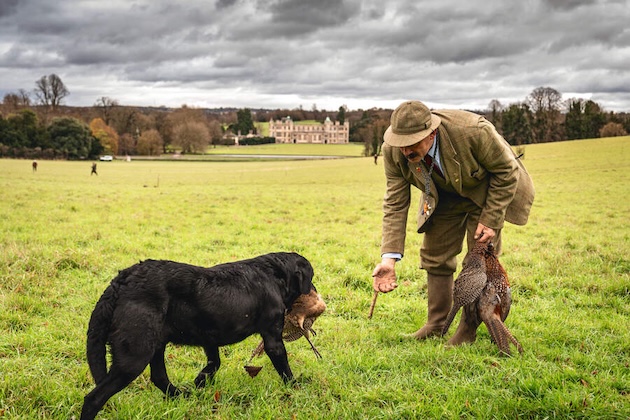
The ancestral roots of the world’s most popular pedigree dog, the labrador, may have come to us via the Atlantic but it’s the most British of animals, despite its name. And that name is misleading. If you believe the historians, the first labradors came from Newfoundland, though quite how they got there is a complete mystery, for Newfoundland has never been a particularly doggy place. (Read Ben Fogle on labradors.)
Labrador origins
It’s quite likely that the name ‘labrador’ has nothing to do with the Canadian province but is instead a corruption of the Portuguese word trabalhador, which means ‘worker’. It was reputedly Portuguese fishermen who, 200 years ago, brought the first labrador-type dogs to Poole Harbour, where the 2nd Earl of Malmesbury, a local resident, spotted their potential as sporting dogs. He called them little Newfoundlanders but it was his son, the 3rd Earl, who renamed them labradors: the name they have been known by ever since.
The Malmesbury dogs were bred without crossing them with local breeds, and soon established a reputation for their ability in the shooting field. We do know that in around 1835 some of them were taken to Scotland by the 5th Duke of Buccleuch. These became the founding stock for the famous Buccleuch line of labradors: one that helped establish the breed as we know it today.
In the Victorian era the labrador faced stiff competition from the long-established curlycoated and flatcoated retrievers, and it wasn’t until the early years of the past century that sportsmen began to take notice of the talented new arrivals. It is remarkable how quickly they took over. In 1900 flatcoats were the undisputed top retrievers. Just 10 years later they had been eclipsed by the labrador.
Victory in 1909 at the first International Gundog League Retriever Championship undoubtedly helped. The winner was the Duchess of Hamilton’s black dog Dungavel Phoebe. Labradors have dominated the event ever since (though there have been a few wins by golden retrievers, the only flatcoat success was in 1912). (Read: what is the best labrador colour?)
Not everyone welcomed the newcomers. In the years leading up to the First World War the letters pages of this journal were filled with arguments in favour of one breed or the other. EG Wheeler ‘ventured to think that, with all their brilliance, the labrador has serious faults… Very obedient, with any amount of dash, they impress one at first at being vastly superior to their Flatcoated and Curly confrères.’ However, he went on to conclude that they were hard mouthed, rarely followed a line and often failed to gather a dead bird even after ‘hunting most diligently over the spot where it fell’. (Read more on flatcoat retrievers.)
To give Mr Wheeler his due, he also noted that the faults ‘may also be bred out in time’. There were, of course, many letters from supporters of labradors. Self-confessed labrador man A Holland- Hibbert argued that ‘considering how vastly the Flatcoats outnumber the Labradors throughout the country, considering, too, for what a short time the Labradors have been popular among sportsmen, their success in trials is a good testimony for the superlative merits of the Labrador’.
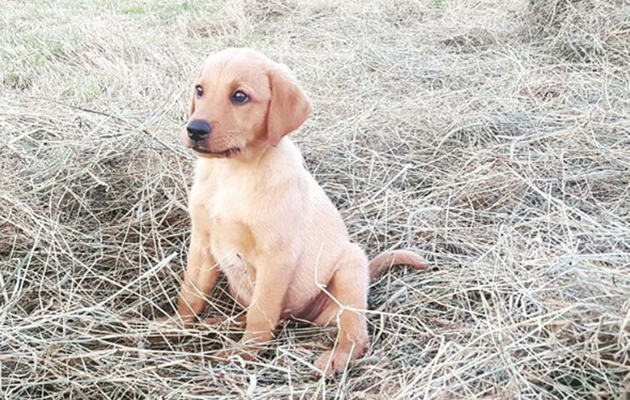
Labradors are popular family pets
Family pets
It didn’t take long for these merits to be noticed by people looking for family pets, for the breed’s sound temperament and easy trainability made them ideal for this role. They proved just as capable as guide dogs as shooting dogs, while today they are used around the world as sniffer dogs – I’ve met them in some unlikely places, including airports in Tobago and Bhopal. On both occasions I plucked up the courage to talk to their somewhat intimidating handlers: they loved chatting about their charges.
Labradors are a common sight in the show ring. More than 500 qualify for Crufts every year, making them the most numerous breed at the show. Perhaps the biggest surprise is that they have so seldom won Best in Show: the last win was in 1937 when Cheverell’s Ben of Banchory took the title.
He was owned by Lorna, Countess Howe, who also won the title in 1932 and 1933 with her dual champion Bramshaw Bob.
View this post on Instagram
The modern labrador: show and working
Sadly, dual champions (champions on the show bench and in the field) are creatures of the past. The modern labrador has evolved into two distinct types: show and working, with the latter tending to be longer-legged and athletic while the former are heavier and more stockily built. To my eye, the working dogs are much the better-looking but I am biased.
A bit like the Model T Ford, labradors originally came in just one colour: black. The first registered yellow labrador was Ben of Hyde, born in 1899. The Yellow Labrador Club was founded in 1924 and remains active today. There’s a record of liver-coloured puppies being born in the Buccleuch Kennels in 1892; however, it wasn’t until the 1930s that liver dogs became accepted. Nowadays we know them as chocolates. (Read: the rise and rise of the fox red labrador.)
Labradors have been Britain’s most popular breed for many years, and feature in the top 10 breeds in almost every country that produces such statistics, from the US to Australia. I’m sure that the Earl of Malmesbury would be delighted.
This article was first published in The Field in June 2026. Subscribe today and never miss an issue.
Main image credit: Sarah Farnsworth