



While his many exploits saw him dubbed ‘England’s greatest sportsman’, Lord Lonsdale was just as famous for his extraordinary extravagance, as Sir Johnny Scott explains
Hugh Lowther, 5th Earl of Lonsdale, was born in 1857. He was the second son of Colonel Henry Lowther and Emily Caulfeild, who was the daughter of St George Caulfeild of Donamon Castle in Roscommon, Ireland. In 1872 the Colonel inherited the earldom from his uncle and with it 100,000 acres in Cumberland, the town of Whitehaven, rich coal fields and iron ore mines, Lowther Castle, Whitehaven Castle, Barleythorpe Hall in Leicestershire and a great mansion in Carlton House Terrace.
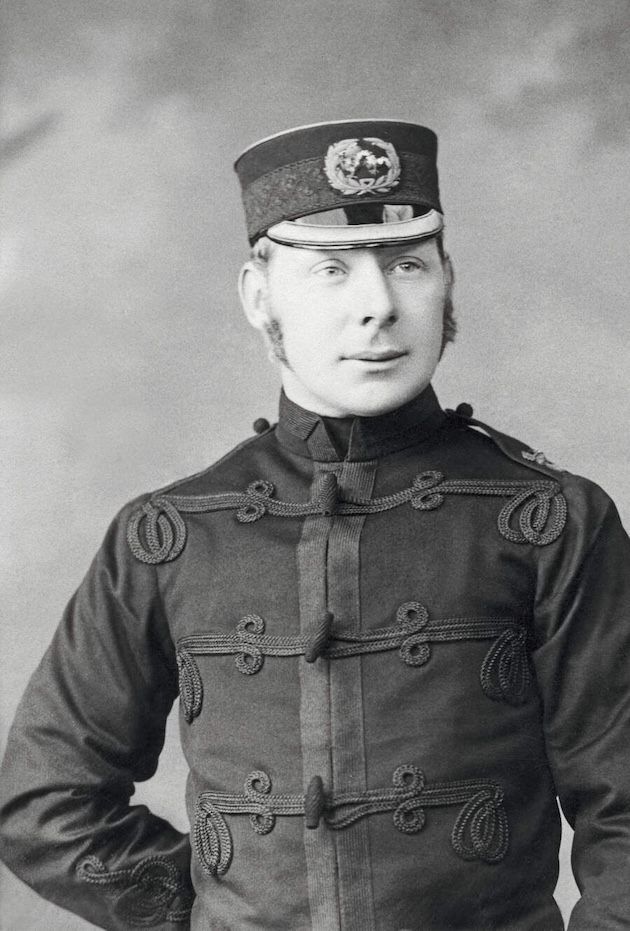
Hugh Lowther, 5th Earl of Lonsdale
Henry’s passion was hunting – he was Master of the Cottesmore from 1870, continuing the long family association dating back to 1666 – and had no interest in his children’s education other than that they should ride well. As a result, Hugh became an excellent horseman.
Enrolled at Eton on his mother’s insistence, young Lowther lasted just two years before leaving. He was then put in the charge of the retired bare-knuckle boxing champion Jem Mace and a succession of tutors, none of whom stayed any length of time.
Sent to a finishing school in Switzerland at 16, he absconded after a month and joined a travelling circus, only returning when his father agreed to give him an allowance of £1,000. He then moved to London where he acquired a coterie of hard-living bachelor friends, including ‘Chicken’ Hartopp, Moreton Frewen (known as ‘Mortal Ruin’) and Sir John Astley, who put hunting above all else and scorned strait-laced Victorian society. Society, in turn, disapproved of them.
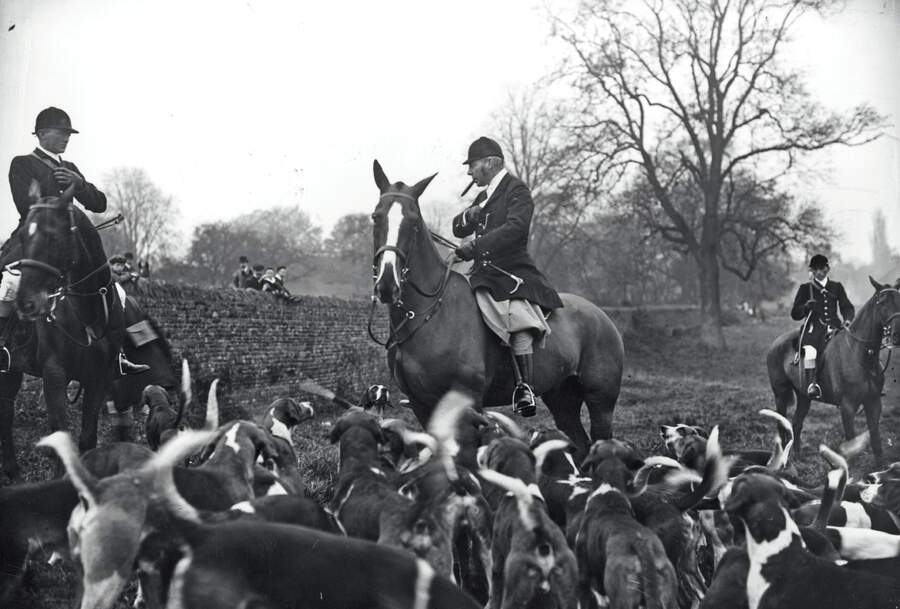
In the hunting field
One of Lowther’s early exploits was a walking match for a bet against a prize-winning American road walker who had come to London. The race was over 100 miles, from Knightsbridge Barracks to the Ram Jam Inn beyond Stamford. Lowther, superbly fit, covered the distance in 17 hours and 21 minutes. News of his win was picked up by the press and started the reputation that would earn him the soubriquet of ‘England’s greatest sportsman’. In 1876 Lowther’s father died and his elder brother, St George, inherited the title and colossal Lowther fortune, leaving Hugh only a pittance. Despite the imminent threat of bankruptcy and stiff parental opposition, he married Lady Grace Gordon, daughter of the Marquis of Huntly, in 1878.
The following year, hoping to rectify his economic situation, he borrowed £40,000 and ploughed it into an American cattle-ranching venture set up by his friend Frewen. It failed disastrously and the Lowther trustees were forced to bail him out to avoid a scandal. In the unrelieved financial gloom after this calamity, Lowther simply bounced back. On hearing that John L Sullivan, the world heavyweight boxing champion, was touring the US and offering to fight anyone for £200, he immediately sailed for New York and won via knockout in the sixth round. Although the fight had been conducted in secrecy, news inevitably leaked and his reputation with the sporting public was cemented.
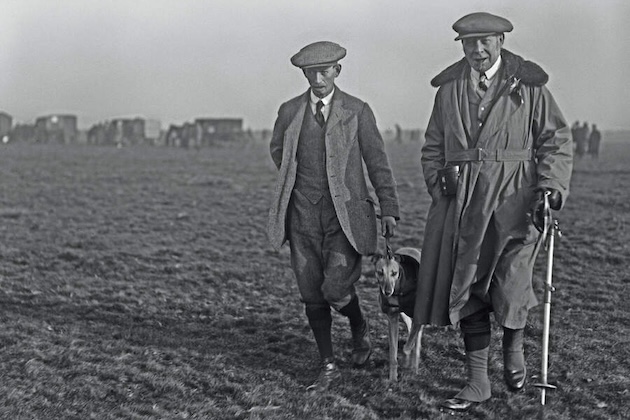
Attending the Waterloo Cup in 1920
When his brother died in 1882, Hugh became the 5th Earl of Lonsdale and inherited an annual income equivalent to £18m today. He set about spending it with reckless abandon, appointing his own master of horse, chamberlain and groom of the bedchamber as well as a master of music to conduct an orchestra of 25 musicians – all of whom travelled with him whenever he moved from one or other of his great houses. All his indoor servants, of which there were hundreds, were dressed in a striking livery of canary yellow with blue facings, as were his coachmen and postilions, who wore white buckskin breeches and white beaver top hats. His coaches were painted in the livery and drawn by matched pairs of chestnuts. In 1905 the Automobile Association – better known as the AA – adopted it when he became the first president.
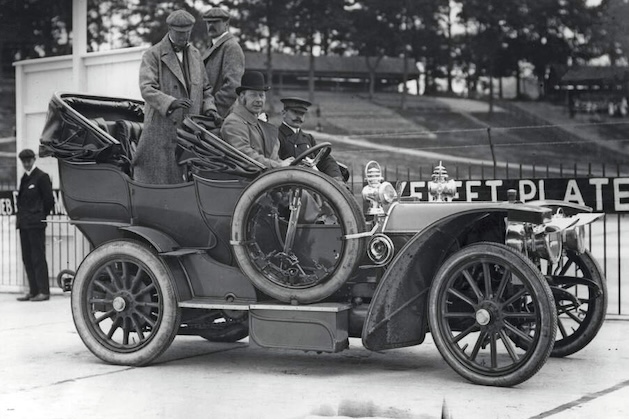
Arriving in his Mercedes at the first Brooklands race meeting in 1907
The ‘Yellow Earl’, as the public now knew him, revelled in the publicity this Homeric spending spree attracted. He was even amused when his brother-in-law Lord Ancaster described him as ‘almost an emperor, not quite a gentleman’ but not even his immense income could cope and the Lowther trustees were alarmed. Added to this was the scandal of his brawl with Sir George Chetwynd in Hyde Park over the favours of Lillie Langtry, and his affair with the actress Violet Cameron. Queen Victoria let it be known that it was time Lord Lonsdale left the country and the trustees agreed. Fortuitously, opportunity presented itself when the Scottish Naturalist Society required someone to undertake an expedition to the frozen wastes of north-west Canada. This was just the sort of ‘Boys’ Own’ adventure that appealed to him and he left for Canada in a blaze of publicity, returning a year later to a hero’s welcome.
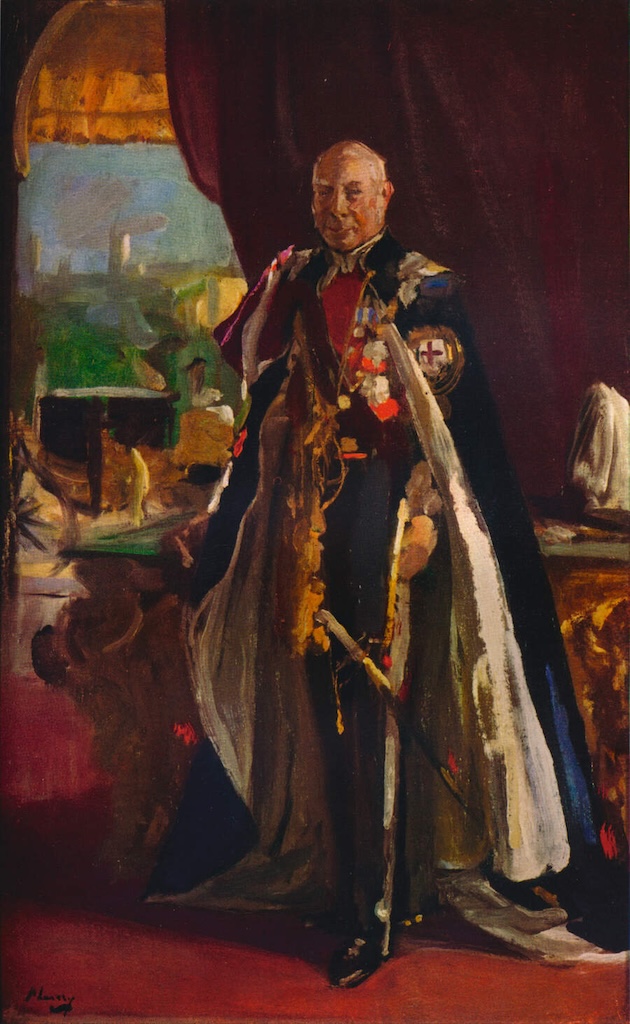
Portrait by Sir John Lavery
Shortly afterwards he was appointed founding president of the National Sporting Club, donating the first Lonsdale Belts in 1909. He became Master of the Quorn from 1893 to 1898, Lieutenant Colonel of the Westmorland and Cumberland Yeomanry in 1897 and Assistant Adjutant-General for the Imperial Yeomanry during the Second Boer War. He was also Master of the Cottesmore from 1907 to 1911 and the first president of the Royal International Horse Show, whose inaugural event took place in 1907.
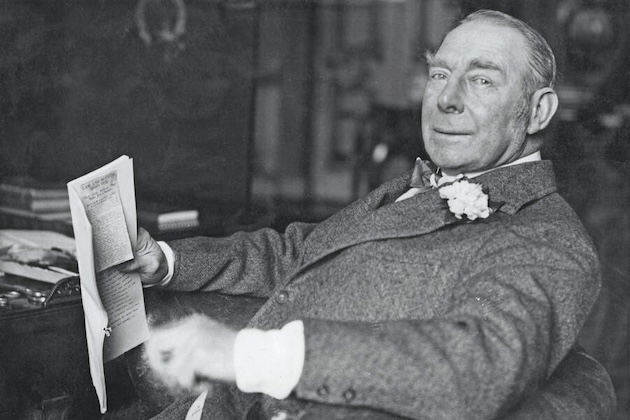
The ‘Yellow Earl’ was widely celebrated as a sporting legend
During the First World War, Lonsdale raised the Lonsdale Battalion of the Border Regiment and became the recruitment officer for both men and horses, as well as the president of the Blue Cross and vice-president of the RSPCA. He took up Mastership of the Cottesmore again from 1915 to 1921 then gave up hunting to concentrate on racing and coursing under rules, winning the English and Irish St Legers in 1922 with Royal Lancer, and the Waterloo Cup with Latto in 1923. George V appointed him as a Knight Grand Cross of the Royal Victorian Order in 1925. The next year he became a senior steward of the Jockey Club and in 1928 was made a Knight of the Garter.
By then the consequences of his extravagance (his cigar bill alone was £3,000 a year) had caught up with him, as first Whitehaven Castle was sold in 1924, then Barleythorpe Hall in 1926. In 1935 he was forced to give up Carlton House Terrace and Lowther Castle was closed. Unrepentant that his entire fortune had been dissipated, he observed in a letter shortly before his death in 1944 that ‘Life has been such lovely fun.’