



Roguish, headstrong yet irresistibly charming, the Jack Russell terrier has captured the hearts of countrymen for generations writes Rupert Uloth
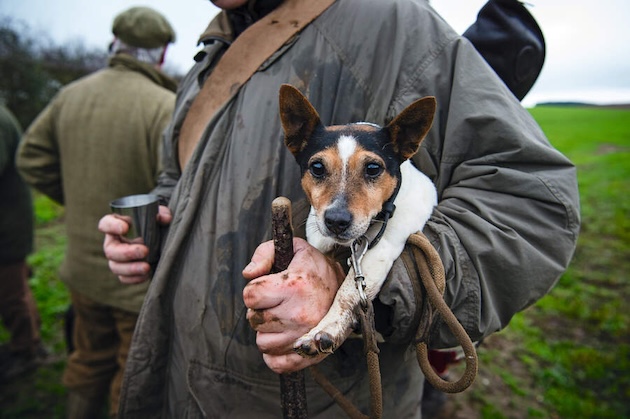
What is it about Jack Russells that the true countryman and woman cannot resist? After all, they can be about as obedient as an angry iguana, are capable of taking on armies of rats with unrestrained glee and think nothing of seeing off dogs seven times their size. But they retain a loyal following among those who lead the truly rural life, even when they temporarily find themselves in town. There is a side of their nature that is unfailingly fetching, whatever crime has been committed, and they possess a seductive, if roguish, charm that invites unconditional love.
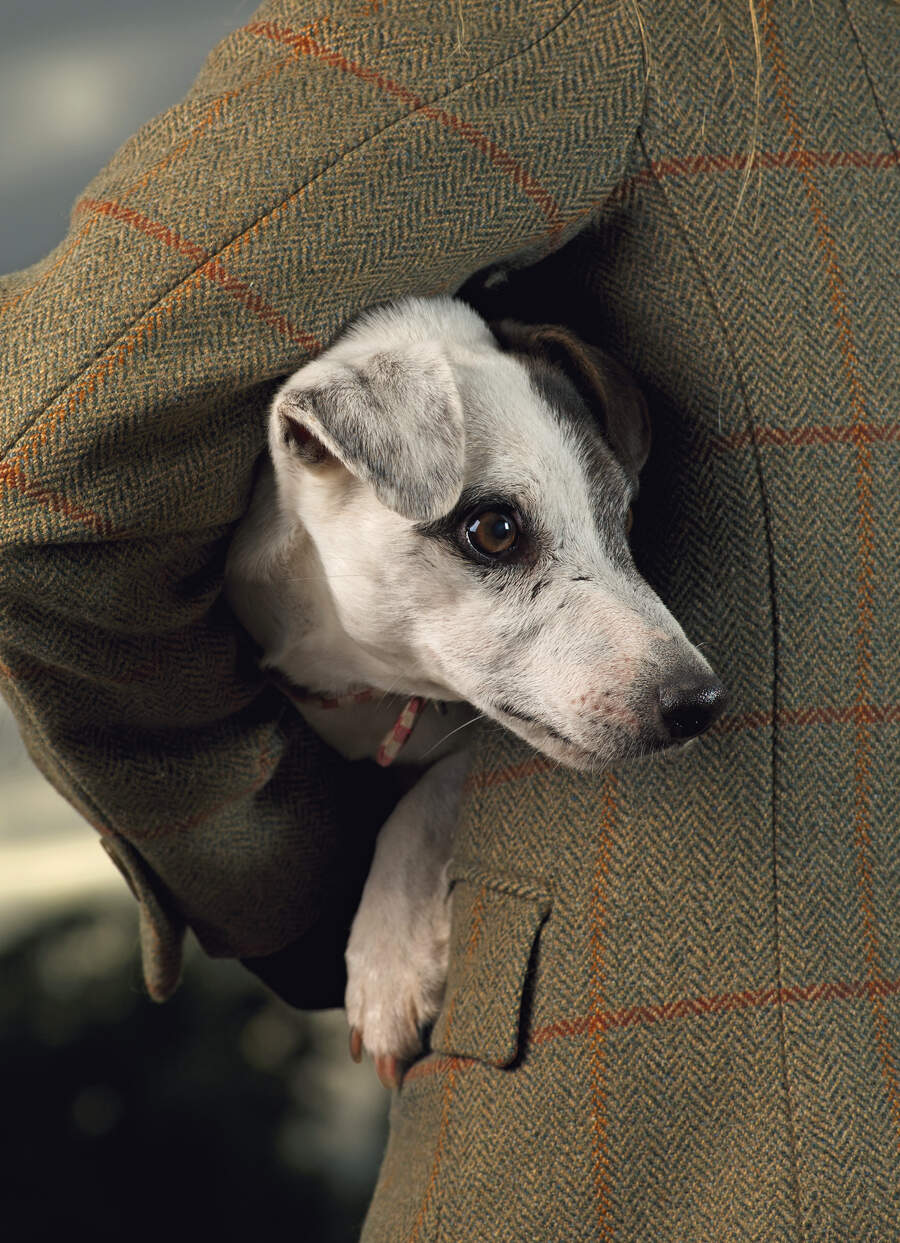
These diminutive terriers have devoted fans in all corners of the country
In recent years it seems that other breeds have come to the fore of fashion. The word ‘poo’ is found in six of the top 10 crossbreeds, and not in a scatological sense but because they are part poodle. Indeed, the cockapoo is now the most popular dog breed in Britain according to the Royal Veterinary College. But, as befits their character, Jack Russells are staging a fightback: the Royal Kennel Club states that they have ‘experienced a boom in popularity in recent years’ and there was a 75% surge in puppy registrations in 2025 compared with 2024. Reserve Best in Show at Crufts in 2024. The breed is still to be seen in force at horse trials – Olympic medallists Mark Todd and Pippa Funnell can commonly be found with one trotting by their sides – but the recent rise has been partly prompted by Zen, the adorable tail-wagging rough-coated Jack Russell from Japan who was sparking enthusiasm among the Tik- Tok generation; the rest is down to Royal patronage and even presidential blessing.
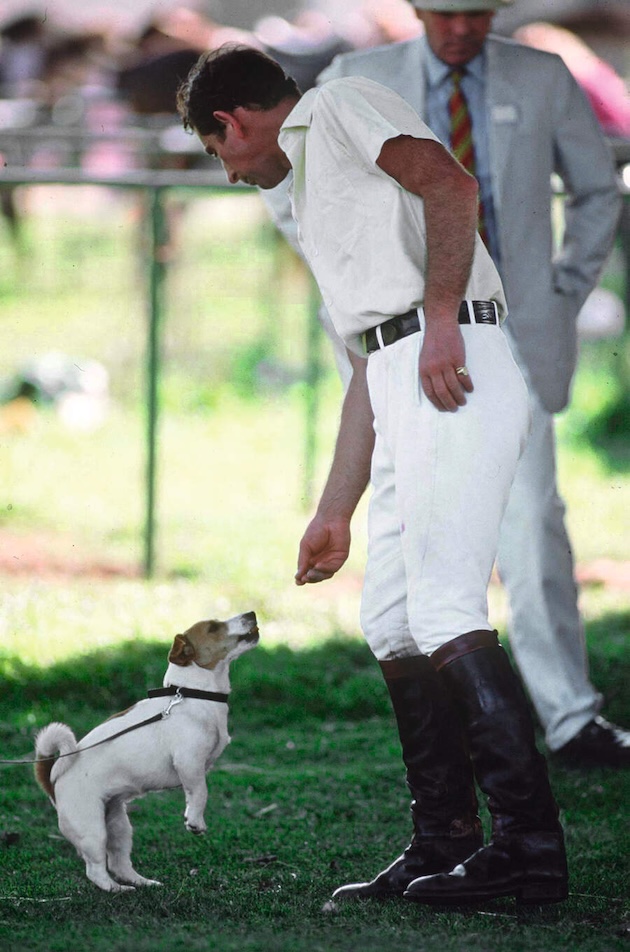
HM The King as Prince of Wales with his beloved Tigga
Colourful characters
HM Queen Camilla adopted two Jack Russells, Beth and Bluebell, from Battersea Dogs & Cats Home in 2011 and 2012 respectively. In a foreword for Top Dogs: A British Love Affair she admitted: ‘They are both colourful characters – and now I cannot imagine my life, my home or my sofas without them.’ They even appeared on the frontispiece page of Country Life magazine wearing pearls. If confirmation were needed of h-er commitment to the breed, a pair of Jack Russells were beautifully embroidered into the gown that she wore for HM The King’s Coronation.
Beth and Bluebell would accompany Her Majesty on official visits, and Beth proved adept at unveiling plaques with her teeth. Sadly Beth died at the end of 2024 but a new companion soon reported for duty at Clarence House in the form of Moley, another rescue dog. The King has long favoured these terriers; when he was Prince of Wales he was devoted to Tigga, who lived to the grand age of 18.
Another Jack Russell to earn the plaudits of a head of state is Patron, who was given an award by President Zelensky of Ukraine in 2022 for sniffing out more than 200 mines. Patron became something of a national hero after the President called him a “wonderful little sapper”, adding that he “helps not only to neutralise explosives but also to teach our children the necessary safety rules in areas where there is a mine threat”. The derring-do and bravery of these diminutive bundles of energy are well documented. Which is the only dog to have travelled to both the North and South Poles? You’ve guessed it: in Bothie, Sir Ranulph Fiennes picked the right kind of dog to achieve such a feat.
So where did Jack Russells come from? Terriers have been in existence for centuries but the man who gave his name to the eponymous ones we recognise as Jack Russells today, the Revd John Russell, was an undergraduate at Oxford in the early 19th century when he had a Damascene moment while strolling in the Magdalen College gardens. The Revd EWL Davies, who became Russell’s curate and biographer, wrote that his hunting-mad subject ‘halted as Actaeon might have done when he caught sight of Diana disporting in her bath; but unlike that ill-fated hunter, he never budged… til he had won the prize and secured it for his own’. That prize in question was the milkman’s terrier, named Trump, who was the first in a long line.
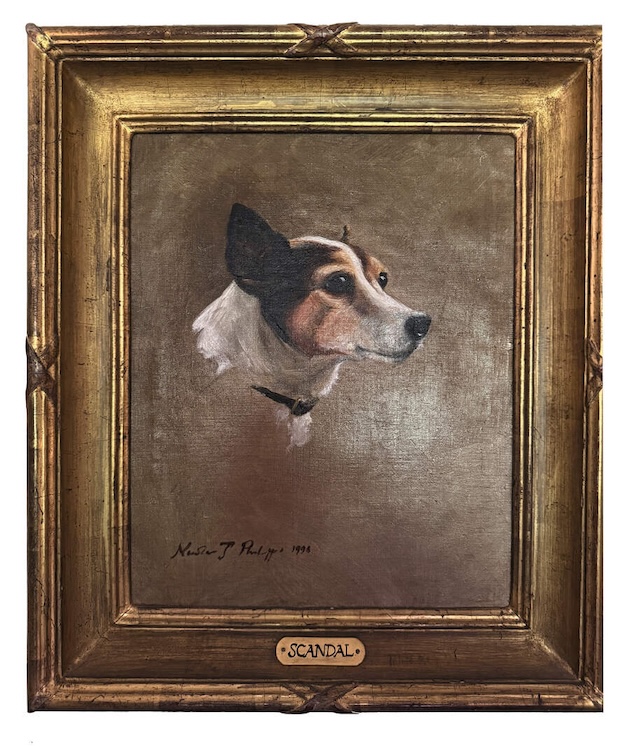
The writer has shared his life with many Jack Russells, including Scandal shown above, whose portraits were painted in oils by Nicky Philipps
Endurance and focus
Russell intended the dogs to be used specifically for foxhunting by going into foxes’ earths and flushing them out as well as running with hounds. These longer-legged terriers evolved into the Parson Russell terrier, while the Jack Russell we know today is generally smaller, with a longer back and shorter, sturdier legs. They are mostly white (easier to spot in the field) with tan, black or tricolour markings. Whereas many terriers were bred as general pest hunters, the Jack Russell was specifically developed for foxhunting and digging, which gave them immense endurance and focus.
His breeding programme has remained a secret, like the recipe for Coca-Cola or the location of Atlantis, but mainly because the Revd John Russell couldn’t quite remember who he had crossed with whom. The resulting alchemy, however, has endured and is part of the magic. Many owners were thus horrified when the breed was recognised by the Kennel Club a decade ago. Approval by the powers that be was not good for the reputation of this maverick outsider who thrived on being unregulated.
This is something I could understand. I have enjoyed the company of these endearing creatures for more than 50 years. Scandal came to me when I was 16 years old. The smooth-haired bitch (whose sister Rumour belonged to my sister) enjoyed a peripatetic lifestyle as I first went to university in rural Devon (I was meant to be at Exeter but lived in a remote farmhouse) and then into the Household Cavalry. I once lost her in Kensington Gardens and an all-day search proved fruitless. I returned to my flat that evening to find her tied to the letter box with a message from a shop owner who had found her in the middle of Knightsbridge tired after a satisfactory morning chasing squirrels.
Scandal even made the Daily Mail when nearly crushed by a table at a book launch for a Jilly Cooper novel. She would come on stable inspections and was known all around the barracks. If I had to go away various friends would look after her and one, Nicky Philipps, the renowned portraitist whose works include the late Queen and HRH The Prince of Wales, also painted Scandal’s portrait in oils – a piece I count among my proudest possessions. Supremely adaptable, she was my constant, loyal and loving companion, and luckily she approved of the girl I married. They didn’t all pass the Scandal test.
The next Jack Russell to come into my life arrived as a wedding present from my father; Shufti was the daughter of his Jack Russell, Libel, and grew up with our children. She tolerated her ears being pulled and having small children curl up on her bean bag with her. Yes, she did savage the Pony Club district commissioner’s dog in public but she had an aversion to white fluffy dogs on leads who seemed to have no purpose in life. When Shufti died we were joined by Benjie. The strange thing about Benjie is that he didn’t belong to us but adopted us because his owners were often away and he travelled over several fields to spend the day with us. We never let him in or fed him – that would have been crossing the line – but he’d sometimes sleep on the doorstep and often came for rides or followed us round the farm feeding the animals. He became part of the family over several summers (he was sent to Ireland in the winters) and we were inconsolable when he was eventually exiled to South America.
Haggis is well known to the film crew for the latest Jilly Cooper television series Rivals, much of which was filmed at his home in Neston Park in Wiltshire. He is the 12-year-old rough-coated Jack Russell given to Sir James and Lady Fuller by John Hall, the current president of Bath Rugby Club, and his wife Kirsty. “He is a lover not a fighter,” says Lady Fuller. “Unless he’s ratting. Then he completely changes.” Rivals was not an acting one-off for Haggis, who also found himself in Agatha Christie’s Towards Zero and stole a pig’s trotter in Poldark. He also attends each (pheasant) shooting day and, while he has been known to start devouring a pheasant mid-drive, he can generally be relied on to bring it back to the peg.
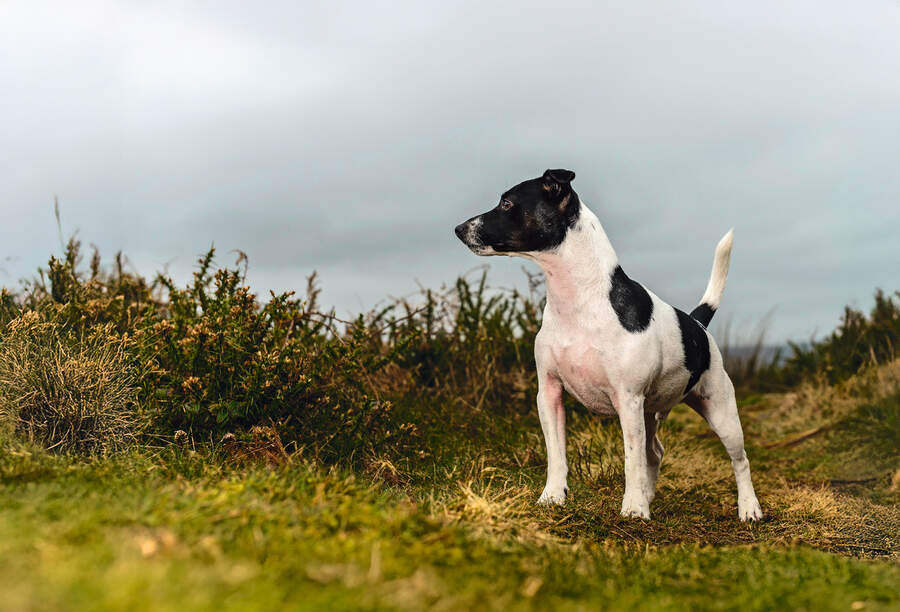
Jack Russells have experienced a boom in popularity in recent years
King of the shooting field
Daphne Hanbury has been rated by this magazine as one of the best shots in the country and she says that her Jack Russell, Frank, also enjoys his sport almost more than anything. He is an outstanding retriever and will pick up enough to make her husband Nigel proud and then retains one or two for burial, which he is allowed to consume later. She believes that it is better to allow Jack Russells to indulge their natural instincts. “The theory is that while all my friends are stressed about their dogs’ manners, we can honestly say that Jacks are untrainable. But Frank is full of joy. He is happy all the time. You can never be sad when he is in the room. Now that he has become a father he sees himself as a gladiator, womaniser and king of the shooting field… for the latter I just have to remember to take a lead.”
Charles Homan, former Master of the Chiddingfold, Leconfield & Cowdray, has surrendered his house to Radish, Ternip (sic), Roobarb and Rocket. Although Radish is capable of jumping high fences to chase cats out of the garden, she really likes curling up in front of the Rayburn. Ternip is a dab hand at moving cattle from field to field. Roobarb spends much of her life in local pubs with daughter Charlotte, and Rocket is a regular in officers’ messes with Army officer son William, winning the best dog prize at RAF Lyneham. William credits the latter with great intelligence and mischief “while appearing completely innocent”.
There is no doubt that Jack Russells have their fans in all corners of the country and Queen Camilla only reflects what most owners feel. Once you have had a Jack Russell your life will never be the same.
This article featured in the June 2026 edition of The Field. Isn’t it time to subscribe?