



The man behind the Nevill Holt Festival talks to Tim Relf about the role the event plays in ensuring the future of not only this historic estate but the rural community around it
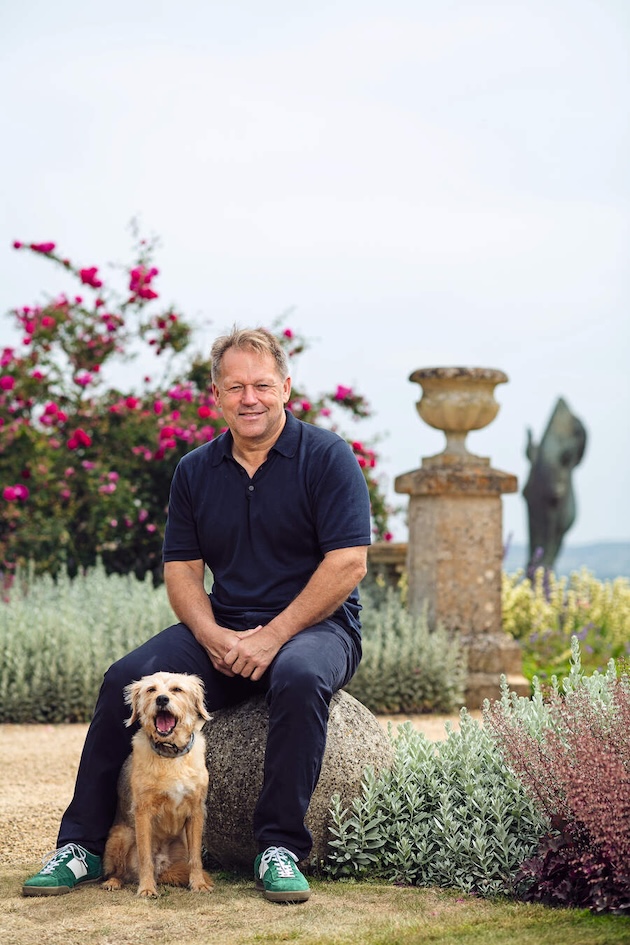 When David Ross celebrated a recent milestone birthday, he asked friends whether they could give him trees as presents. “I’m obsessed by them,” says the landowner, entrepreneur and philanthropist. “I love seeing them grow; it gives me a real sense of excitement – even though it’s a slow process.” Some of his enthusiasm is due to the benefits they bring for shooting but, also aware of their amenity and environmental value, he has planted traditional species extensively at his Nevill Holt estate in Leicestershire. It’s just one element of an ambitious programme to restore and improve the house, gardens and landscape, a project ongoing since 2000.
“I don’t understand, for instance, why this house never had a ha-ha so we’ve put one in, giving an uninterrupted view over the Welland Valley. It looks as if it’s been there forever,” he declares. Once owned by the Cunard family and more latterly used as a school, the main house needed a huge amount of care and investment when it was acquired by Ross, who co-founded Carphone Warehouse in 1991: “It’s a never-ending project but that’s what makes it so fascinating. We’re returning the place to how it once was while giving it a new and different life.”
These two objectives are, Ross says, “entirely consistent” and this approach is evident wherever you look. Statuary by luminaries such as Antony Gormley and Rachel Whiteread dot the 10-acre gardens, which contain an ancient Cedar of Lebanon and kitchen gardens dating to the 1660s. Step inside and modern art adorns the 13th-century walls of the hall. “We’re trying to use spaces in a contemporary way but there is extraordinary architectural, archaeological and social history that we need to understand and respect. It’s a journey of discovery and a source of great pleasure and pride.”
Nowhere is this synergy of old and new more evident than in the theatre created in the old stable block. It’s a magnificent, award-winning space seating 400 that serves as a community resource that comes alive during the Nevill Holt Festival, which attracted more than 15,000 visitors in 2025. This year’s event, which runs from 29 May until 21 June, features an eclectic mix of opera (Donizetti’s Don Pasquale), comedy, cabaret, literature and family programming. Highlights include satirist Rory Bremner, and Clare Balding in conversation with Olympic gold medallist Rebecca Adlington. Meanwhile, former head of the British Army General Sir Patrick Sanders and political journalist Tom Newton Dunn will be recording a live episode of the hit podcast The General & The Journalist. “We’ve created a diverse, accessible offering that appeals to a local audience, as well as a regional and national one,” explains Ross, a long-term patron of the arts, and former chair of the National Portrait Gallery. The festival draws people of all ages and works closely with the David Ross Education Trust, which partners with about 70 schools, helping broaden pupils’ horizons by giving them access to enriching artistic opportunities.
With the estate a private space for most of the year, Ross believes visitors find the festival a particularly personal experience. “The opening day acts as a real target, by which we have to make sure the gardens and estate are looking absolutely perfect. It’s incredibly motivating, and the whole team is very proud of what we’ve created. The community backs it, too – local B&Bs, pubs, hotels and taxi drivers love it,” he says.
A quarter of a century on from buying the place, Ross spends most of his time here and sees it as ‘home’, although he also owns a Yorkshire grouse moor where he enjoys shooting and walking. “I grew up in Grimsby in Lincolnshire, had been at school in Uppingham and was at university in Nottingham, so Nevill Holt seemed a great place to settle. I knew this area and the house even when I was young,” he explains.
One of the best views of the Welland Valley is to be had from the front lawn, standing beside Nic Fiddian Green’s huge bronze sculpture of a horse’s head. Bowed as if drinking while suspended balletically from the sky, this piece of artwork and the panoramic views have become synonymous with the festival.
“The terrain here also makes it perfect for a gentle, friendly and family-orientated partridge shoot,” adds Ross. “I’ve always loved the sport and when I moved here I soon realised many of my neighbours were committed to hunting, too, so I thought I should give it a go. But I’m not genetically predisposed to being on a horse,” he admits. “Hunting is an important part of this community, though: the Fernie meets here every year and hunts over our land, so I’m very supportive of them. The Government seems to have a vendetta against the countryside and the rural community but the relationship between landowners and their neighbours are fostered through activities such as hunting. It is the glue that keeps rural communities together.”
The festival is now an integral part of that, too. “Nevill Holt was in such a sad state when I bought it, but I looked at the bones of what was here and thought this could be absolutely beautiful and it should be beautiful again – and, 25 years on, I would say it is.”