




As sporting folk we like to know our equipment. To enjoy a successful day - be it rod, rifle or gun - we need to understand and trust our gear. Those riding to hounds know each part of their tack and can effortlessly take it apart. Fly fishers can assemble variations of rod, reel, and line to choose the right combinations for the conditions. Shooters know the parts of their shotgun to understand how it works … and to clean it after a day in the field.
Thinking about the key parts of a cartridge can help us choose the right load for the day. There are a vast array of cartridge choices on offer, with a barrage of figures and statistics that can make selection bewildering. Understanding how each element works can make that choice more straightforward and understand it better: gauge, cartridge length, load and shot size, wad, case and primer.
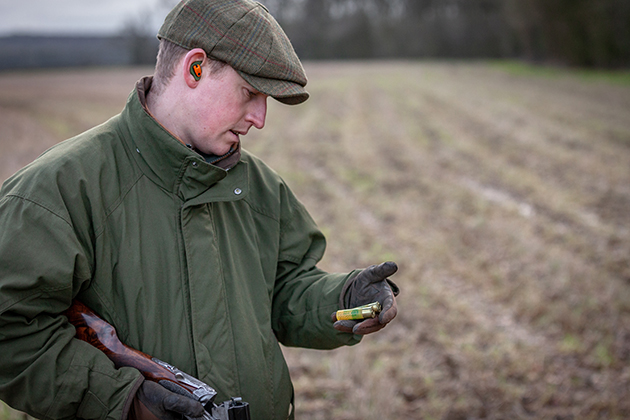
Understanding the parts of a shotgun cartridge ensures an enjoyable day in the field. Here is our guide.
Guaging responsibly
The shotgun gauge refers to the bore or inner diameter of the shotgun barrels. The choice of what gun to use on a day’s sport is determined by quarry and personal choice. It could be a 12- or 20-bore, light or heavy, long or short barrels. The conundrum of side by side or over and under is one often debated but never solved. Whatever the choice it is essential the cartridge is right for the shotgun.
The right gauge and calibre must always be used for the correct gauge of gun, length for the chamber, and proof rating. Using the wrong gauge of cartridge in a shotgun can be devastating and it is vital to never mix different cartridges gauges.
Cartridge length
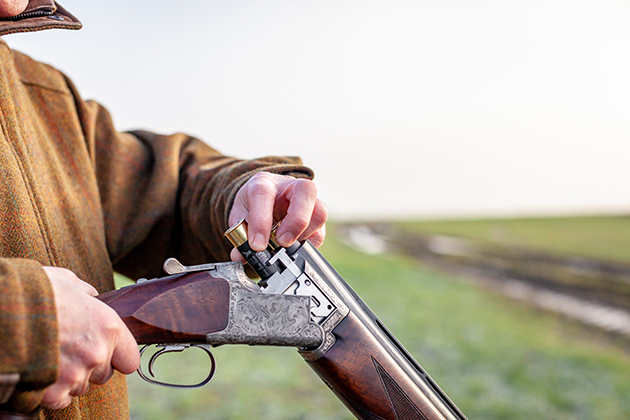
Cartridge length must not exceed the length of the gun’s chamber
Modern guns typically have a chamber length of 70 or 75mm, whereas older guns can often be 65 or 67mm. The length of a cartridge must not exceed the length of your guns chamber. Many older side-by-sides were made before longer cartridges were available. Cartridges such as Eley Hawk’s iconic Grand Prix are a classic load for use in older guns or side-by-sides with shorter chambers. If you are unsure ask advice from your gunsmith.
A good shot
Shot size and cartridge load are one of the key choices available to the sportsman. Shot size refers to the diameter of each pellet: the higher the number, the smaller the pellet. Load is the gram (or ounce) weight of pellets in a cartridge. The larger the load the more pellets.
As a responsible shooter we choose the right load for the right quarry. Game shooting requires heavier loads and larger shot sizes than clays as they offer more striking power. For many guns during the season a 30g size No. 6 is a ‘go-to’ load, whether for pheasant, partridge or walking the moors. Early season birds can be taken with a lighter load, but as the season’s progresses and the quarry becomes heavier and stronger, one should increase the load and shot size. Eley Hawk’s VIP Game range is one of the longstanding cartridges of choice for game enthusiasts.
In clay shooting, less energy is needed to smash a clay and a typical clay shot size is 7 ½s. For the competitive clay shooter, a 28g load of this smaller shot means more pellets sent at the target. Lighter loads such as 21g offer less recoil and can be easier to use for young guns entering the sport.
Steeling ahead for non-toxic
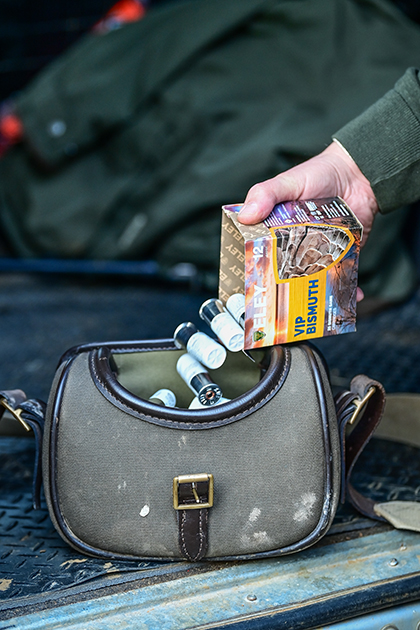
An Eley Hawk bismuth load
The shooting world is gradually moving away from lead towards non-toxic steel shot. It is already a legal requirement when shooting wildfowl. Typically, steel shot size moves up two sizes. Shooting pheasant with 6s lead becomes 4s steel. Crucially your gun must be compatible: for high-performance steel, the gun must be steel-proofed and display the fleur-de-lys on the barrel, or nitro proofed for standard steel. You must check with a gunsmith if your chokes are suitable and if in doubt do not use any more than half choke.
Along with steel, cartridge manufacturers such as Eley Hawk carry Bismuth options throughout their range. Bismuth can be used as an alternative to steel through any choke and is compatible with older and traditional guns. It has a density between lead and steel but is soft enough not to cause damage to gun barrels.
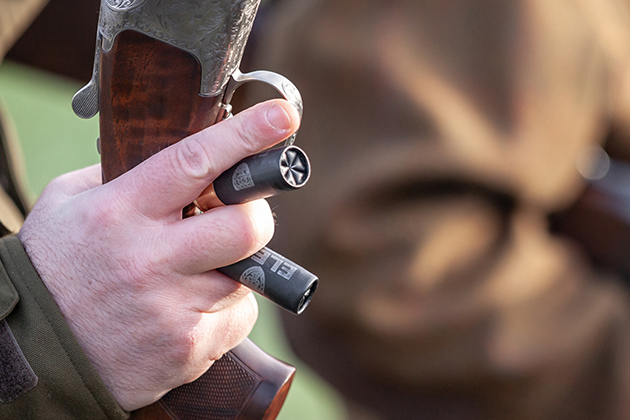
Eley cartridges ready to load
Wad
Inside the cartridge, the wad forms a seal between the propellant and payload, to allow the built gasses to project shot out of the barrel. The two most common types of wad are plastic and fibre. When game shooting and at many clay grounds, a fibre wad is mandatory. For an environmentally aware alternative, the UK’s first fully dissolvable and biodegradable wad was developed by Eley Hawk. Their Pro Eco wad breaks down into the soil within three months, leaving no trace.
Case
The case holds everything together and is typically made of recyclable plastic or paper with a crimped closure (it may be a rolled turnover in some smaller bores). The base is often made of brass and that houses the primer. Introduced in 1903, Eley Hawk’s Grand Prix still offers a paper cartridge for those who want that link to tradition.
Propellant
The propellant is the critical element that dictates how a cartridge performs. The blend and measurement of these smokeless powders are designed to match the requirements of the modern sportsman or game shot. Whether it is powder that offers slower muzzle velocity for use in old English guns, or blended for hard hitting speed such as VIP Federation, companies such as Eley Hawk create a range of cartridges with different ballistic requirements tailored to each shooter’s specific needs.
Head and primer
In the centre of the cartridge head is the primer, the small shock-sensitive charge that ignites the powder when struck by the shotgun’s firing pin. It must be reliable, delivering ignition under any conditions and giving the gun confidence it will work every time.
Read more articles from Eley Hawk here, covering everything from managing recoil to shooting clays in the summer.