



Shake off the end-of-season blues with The Field’s carefully curated selection of unusual and exclusive destinations perfect for your next great adventure
With the season at an end the desire to explore further afield often takes root. To satisfy that sporting wanderlust The Field has gathered together the most extraordinary and unusual of those lesser-known destinations that can provide the ultimate sporting expedition with shotgun, rifle or rod. (You might like to read: six of the best places to go shooting abroad.)
Pheasants: Dominican Republic
Pheasants are not gamebirds one associates with the Caribbean but there is something terrific about undertaking a familiar pastime in alien surroundings. The shooting at Casa de Campo on the western tip of the Hispaniola island is unique: combining luxury, adventure and meticulous hospitality.
Guests begin their day at the resort where immaculate villas, ocean vistas and personalised service set the tone. “On the morning of the shoot, guests are transported by helicopter directly to the private shooting grounds – an unforgettable journey that highlights both the scale of the estate and the attention to detail that defines the experience,” says Philip Wolstenholme, director of sporting at Calvert Sporting. “The flight offers sweeping views of the lush Dominican landscape, adding a sense of drama and anticipation.” The shoot is designed in an American-influenced driven style, with birds presented from rolling valleys. There are shaded rests and cool refreshments between drives, and the atmosphere blends traditional sporting character with refined comfort. At day’s end, guns are whisked away again by helicopter in time for a gourmet dinner or a relaxing evening. This beguiling cocktail of exceptional shooting, breathtaking scenery, and seamless high-end service makes for an indulgent experience that is truly memorable.
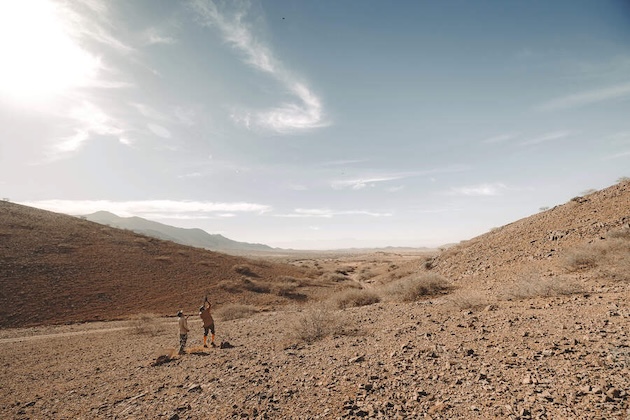
Powerful and energetic Barbary partridges provide a thrilling challenge for guns on Morocco’s El Koudia estate
Barbary partridge: Morocco
Still only a hop, skip and a jump from the UK, Morocco is eminently accessible yet the beauty of the El Koudia shoot in the arid Jbilet Hills feels worlds away. Run by William Powell Sporting and sitting just over half an hour outside of Marrakesh, not only is the sport thrilling but there is plenty to see and do for non-shooting guests. With shoots running to mid-February, it is also a great way to stave off end-of-season blues. Those shooting on the estate tend to take back-to-back days, with an anticipated 1,250 shots on each.
Barbary partridges are native to North Africa so are well adapted to living and flying in the comparative heat. “I am convinced that Barbary fly much stronger than redlegs,” says sporting agent Ollie Severn. “They are slightly bigger in size yet smaller than a hen pheasant, and seem more powerful and energetic. Drives are run more like those on a grouse moor, with guns lining up in familiar fashion while beaters take in vast swathes of land. There are no cover crops to knock out, so these great areas are driven to accumulate the density of game.” Loaders, 4x4s, cold wine and a North African-inspired lunch in the mountainside, Moroccan-style shooting lodge are all laid on to complement the sport provided by these fiery little birds. The sloe gin is chilled on ice: a refreshing twist one seldom requires on colder UK days.
Contact: William Powell Sporting
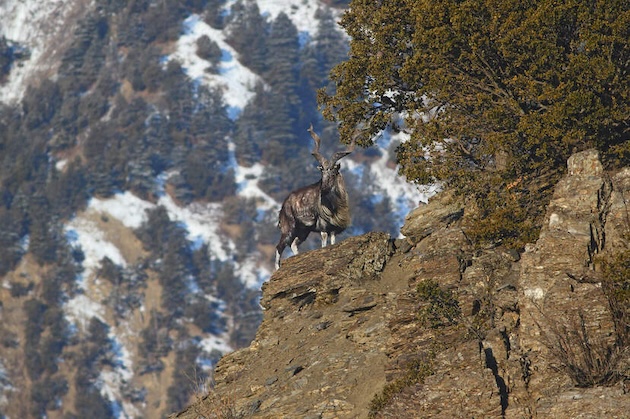
Astor markhor in Chitral
Markhor: Pakistan
The markhor, or screw-horned goat, is Pakistan’s national animal and provides one of the most exclusive hunting experiences on Earth. The Kashmir, Astor, Skardu and Sulaiman markhor are found here. So tight is the control of the hunting of these majestic animals that the country’s government releases as few as 12 permits for exportable trophies each year.
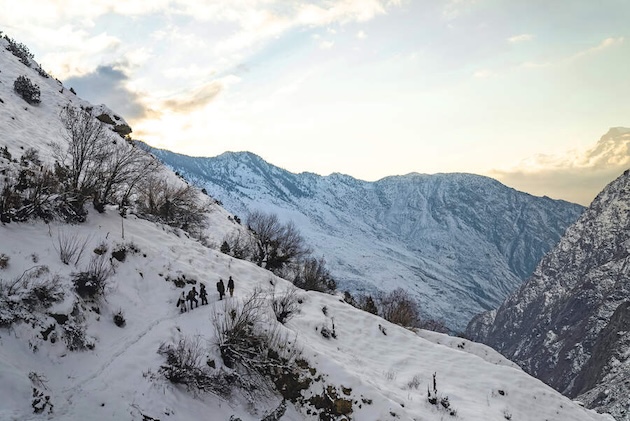
Markhor hunts require coverage of some of the harshest terrain in the world
Rob Kern, managing director of The Hunting Consortium, has advised clients on complex markhor hunts in Pakistan for more than two decades. “The Kashmir markhor, also known as the Pir Panjal markhor, is the largest of the markhor,” he explains. Markhor are found in the rugged mountain valleys of Pakistan. Permits for the chance to shoot one can cost in excess of a quarter of a million dollars and the season runs from 1 December until 31 March. Around 70% of the overall hunt cost and 80% of the permit auction price are returned directly to local communities, supporting conservation, wildlife protection and rural livelihoods. Markhor hunts require coverage of some of the harshest terrain in the world, so it will be judged what a client can safely handle beforehand. Once in the relevant hunting ground, the client meets his field team. This typically includes one or two professional hunters, an interpreter, local community representatives, government wildlife officials and a forestry officer.
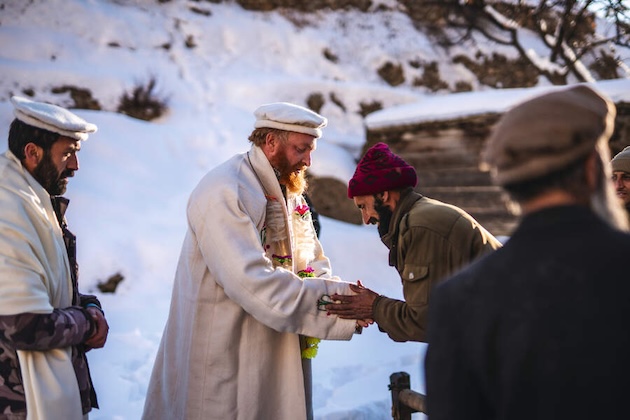
The ceremony after the hunt
Kern describes the pursuit as a classic mountain hunt with “difficult terrain and long periods behind binoculars and spotting scopes”. A good stalk can last most of the day. Expect side-hilling, dropping into gullies, moving through rock outcrops and using terrain folds for cover. Snow leopard activity or changeable weather can also make markhor more alert and quicker to spook. Once the animal is taken and recovered, there is typically a celebration with the local community, and the hunter is often presented with a traditional wool pakol or Chitrali cap: another artefact of a genuine experience of a lifetime.
Contact: The Hunting Consortium
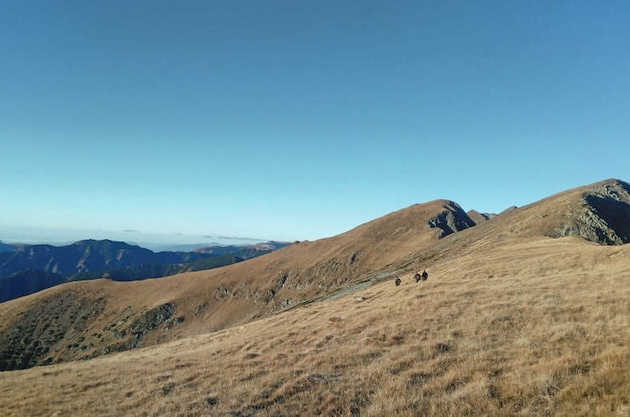
Physical fitness is key when hunting
Carpathian chamois.
Chamois: Romania
For demanding sport amid staggering scenery, and if you don’t mind yomping up some serious mountains, then Carpathian chamois could be just the ticket. A short-haul flight and an easy transfer to deepest Transylvania will land you in the backyard of the largest of the seven subspecies of northern chamois. “The size of the animal is between a roe and a fallow, with rams reaching 60 kilograms in prime condition,” says Razvan Vlad of RBF Outdoor Adventures, which organises all-inclusive chamois hunts in the region.
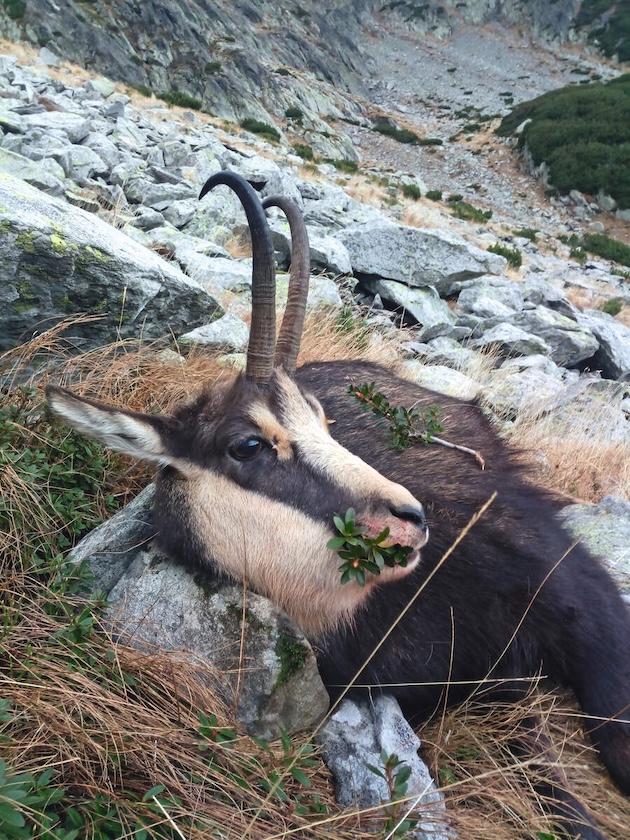
A fallen animal is honoured with the ‘last bite’
These animals are known for their magnificent manes, which are used to produce the gamsbart trophies often adorning hunters’ Tyrolean-style hats, and generally live at altitudes of between 800 metres and 2,500 metres depending on the time of year. The season in Romania runs from 1 September to 15 December, with the main action coming midway through the rut. Vlad emphasises the importance of physical fitness for prospective hunters: the chamois are mostly found in locations without road access, so there’s a requirement for extensive walking, glassing and stalking to secure a good animal. Tight quotas of just 341 rams and 323 ewes in Romania in 2025 ensure numbers stay healthy. More than just a pursuit of a trophy, a chamois hunt opens a window to adventure and a connection with the alpine wilderness.
Contact: RBF Outdoor Adventures
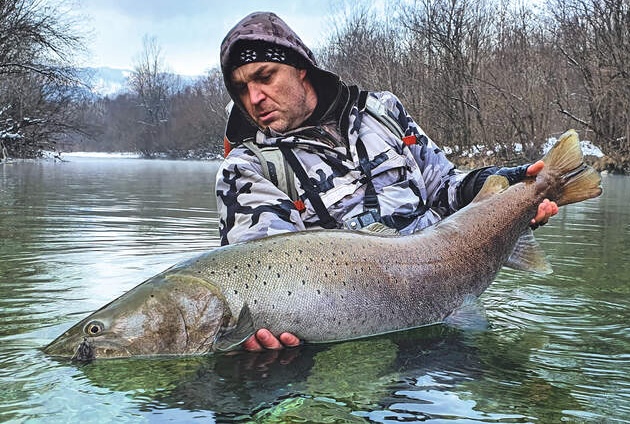
These
salmonids can reach enormous sizes
Huchen: Slovenia
If you’ve had your fill of grayling fishing over New Year and can’t wait for Tweed to open, why not try huchen? The mighty huchen (Hucho hucho), or Danube salmon, is a powerful salmonid endemic to the Danube river basin in Central Europe and the Balkans. Unlike the Atlantic salmon, it is landlocked and mostly remains in the river in which it was hatched for the duration of its life, which can reach up to 15 years. Huchen can grow to vast sizes and there have been reports of fish caught over the past century weighing 100 pounds and more.
Matjaž Kuzma of Green Adventure Travel Agency runs huchen-fishing excursions in the Slovenian Alps and Karst region. “Not so long ago, huchen fishing was allowed only for those who belonged to elite Slovenian fishing clubs and VIP members of society but since Slovenia joined the EU the rules have been relaxed significantly,” he explains. Despite the greater availability of permits to fish, the rules are still fairly strict and anglers are only allowed to use single hooks amid a raft of other restrictions.
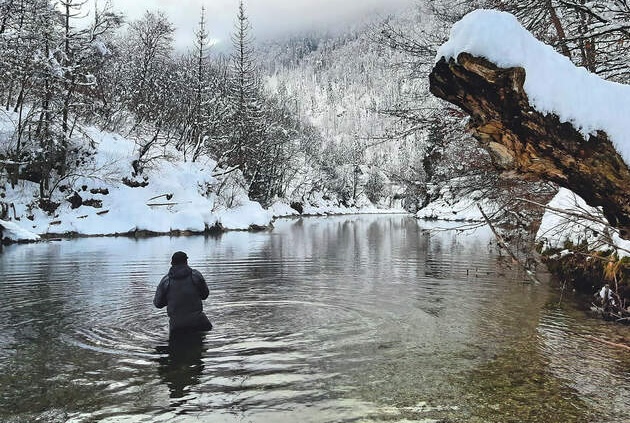
Casting for huchen in the
snow in Slovenia.
With a season that runs on most Slovenian rivers from the beginning of October to 15 February, the chances of fishing in the snow are high, adding a memorable fairytale aesthetic to proceedings. The feeding habits of the huchen differ widely from trout and Atlantic salmon, meaning that catching them presents a unique freshwater test of skill. Kuzma concludes: “Make sure your pockets are full of respect since it’s the beast you are after.”
Contact: Green Adventure Travel Agency
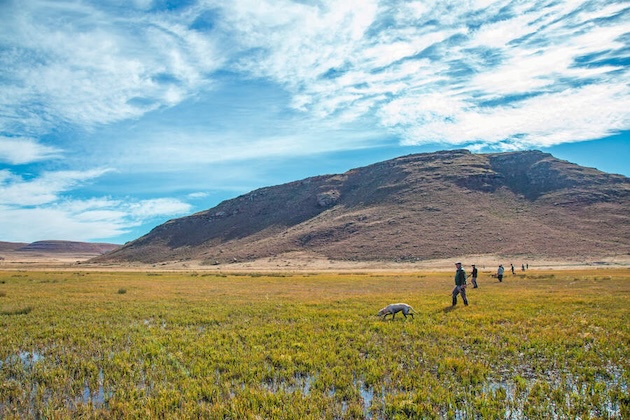
Walking-up snipe in
the lush lower ground
of the Stormberg
mountains in South
Africa’s Eastern Cape
Wing shooting: South Africa
South Africa boasts a huge bounty of gamebird varieties, including guinea fowl, francolin and spurfowl (wild members of the pheasant family), African snipe and a cornucopia of wildfowl. The Purdey Sporting Agency can organise pursuit across formal driven shoots, walked-up over dogs or hunkered down in butts. “Our typical trips suit groups of six guns but smaller or larger groups can be arranged too,” says Matt Smith from the agency. “A typical itinerary would cover seven days of shooting, with breaks for travel between two or three predominant locations ranging from the thick bushveld of the north, through the huge farmland plains of the Free State, to the mountain ranges further south.”
Duck and geese (including the massive, iridescent, red-beaked spur-winged goose) can be flighted from small ponds or ‘dams’ at last light, ambushed on flightlines or shot over decoys on recently harvested peanut fields. Snipe are pursued in the high marshland velds in the mountains, on foot behind pointing dogs or enthusiastic labradors. “Experienced dog handlers, ‘bird boys’ and guides, combined with breathtaking views and top-flight hospitality, make South African sport with shotgun in hand a must on the budding sportsman’s bucket list,” believes Smith.
Contact: Purdey Sporting Agency
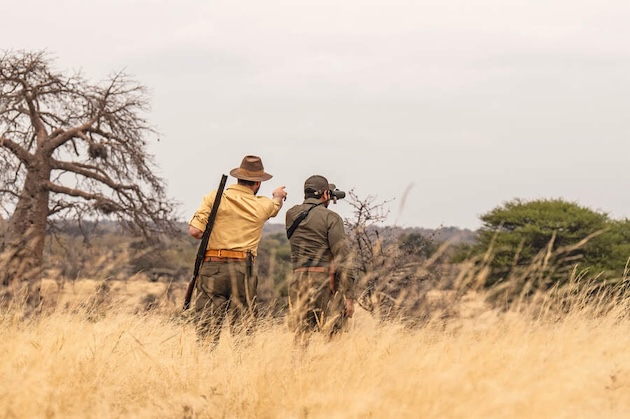
Hunting plains game in Tanzania is as varied as it is challenging, with
each species presenting its own puzzle
Plains game: Tanzania
It may not command the same mythology as the ‘Big Five’, yet for many hunters plains game represents the purest form of safari sport: as varied as it is challenging. Tanzania is wild, vast and still genuinely free-range. The concessions operated by the Rungwa Game Reserve maintain the country’s reputation as a great destination by limiting safari numbers, enriching the quality of the game encountered. The variety of species available further adds to the attraction. Eland, roan, sable, impala, kudu and hartebeest can all be hunted, with each species presenting its own puzzle. The unique country also offers intrigue, forcing hunters to focus on reading the terrain. “It’s not just walking on to an open flat and glassing,” states Mike Jones from Holland & Holland. “One minute you’re in tight miombo woodland, the next you’re tracking across broken ground beneath the Lolkisale massif. It keeps you honest and captivated.” Fieldcraft is at the centre of this particular experience; watching local trackers unravel the overnight spoor of a kudu bull can be as gripping as the shot itself. “The landscape demands patience: long, methodical stalks in the morning cool; slow, deliberate glassing in the heat of the day; then settling near a watercourse at last light when the plains begin to move again,” expounds Jones.
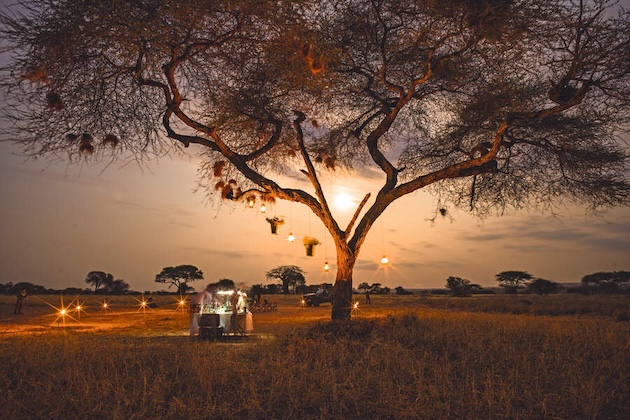
Sundowners at Lolkisale Camp
Accommodation wise, a stay in Lolkisale Camp delivers remarkable levels of comfort and service coupled with sensational vistas. An evening around the firepit on the terrace provides the perfect place to sip a gin and tonic while revelling in the adventures of the day.
Contact: Holland & Holland Sporting Agency
Eurasian boar: Turkey
Thanks to the largely Muslim population of Turkey, their wild boar are not commonly hunted or eaten. There is therefore a reasonable population of Sus scrofa spread throughout the country encompassing some of the largest boar in the world. In Europe a fully grown keiler (tusker) will weigh up to 150 kilograms with tusks up to 22 centimetres in length. In Turkey the fully grown tuskers are up to 300 kilograms in weight with tusks up to 30 centimetres. The Turkish game department allows wild boar hunting year round but the best time for driven hunts is November to February each year.
Johnny Goodhart, director of Goodhart Sporting, organises driven hunts in the snow-capped eastern Taurus Mountains of south-east Turkey near Malatya. The driven days see shooting parties of nine (minimum) to 12 (maximum) widely spaced along either a river system or large mountainous areas where the beaters cover serious distances to drive the boar to the waiting guns. “There are usually three drives on each of the four days of the trip and our aim is for people to average two boar per day. Most importantly, all trophy fees are included in the price,” says Goodhart, adding: “Guns should be aware that some drives are blank, while others are full – such is the fun of wild boar in huge open areas.” For those interested in only hunting the tuskers in Turkey, Goodhart Sporting offers some moonlight hunting trips for big trophy animals. The agency currently has all-inclusive trips for driven boar open for booking: 10-13 December 2026, 7-10 January 2027 and 4-7 February 2027.
For more articles like this, subscribe to The Field and save on the cover price.