




The only thing more frustrating than a drop in performance is not
understanding how to fix it. Michael Yardley reveals his tips
on how to return to form
We can all have the occasional bad day. For some these become more serious: they turn into a general slump. People often struggle to find the cause and can frequently attribute it to the wrong thing. So, how should you deal with a loss of shooting form? The simple answer is methodically.
The first thing to check is your vision, both visual acuity and prescription glasses (if worn). It is also vital to confirm your eye dominance. This may shift subtly or dramatically in middle and later age and can suffer temporary change too. Vision is hard to assess for yourself – book an appointment with an optician. No need to go to a specialist: I’ve found high-street opticians to be excellent and cost-effective providers. I go annually now. A regular eye test may also pick up cataracts, which can degrade performance severely with blurred vision, reduction in contrast, and diminished detail and depth perception. (More on shooting vision here.)
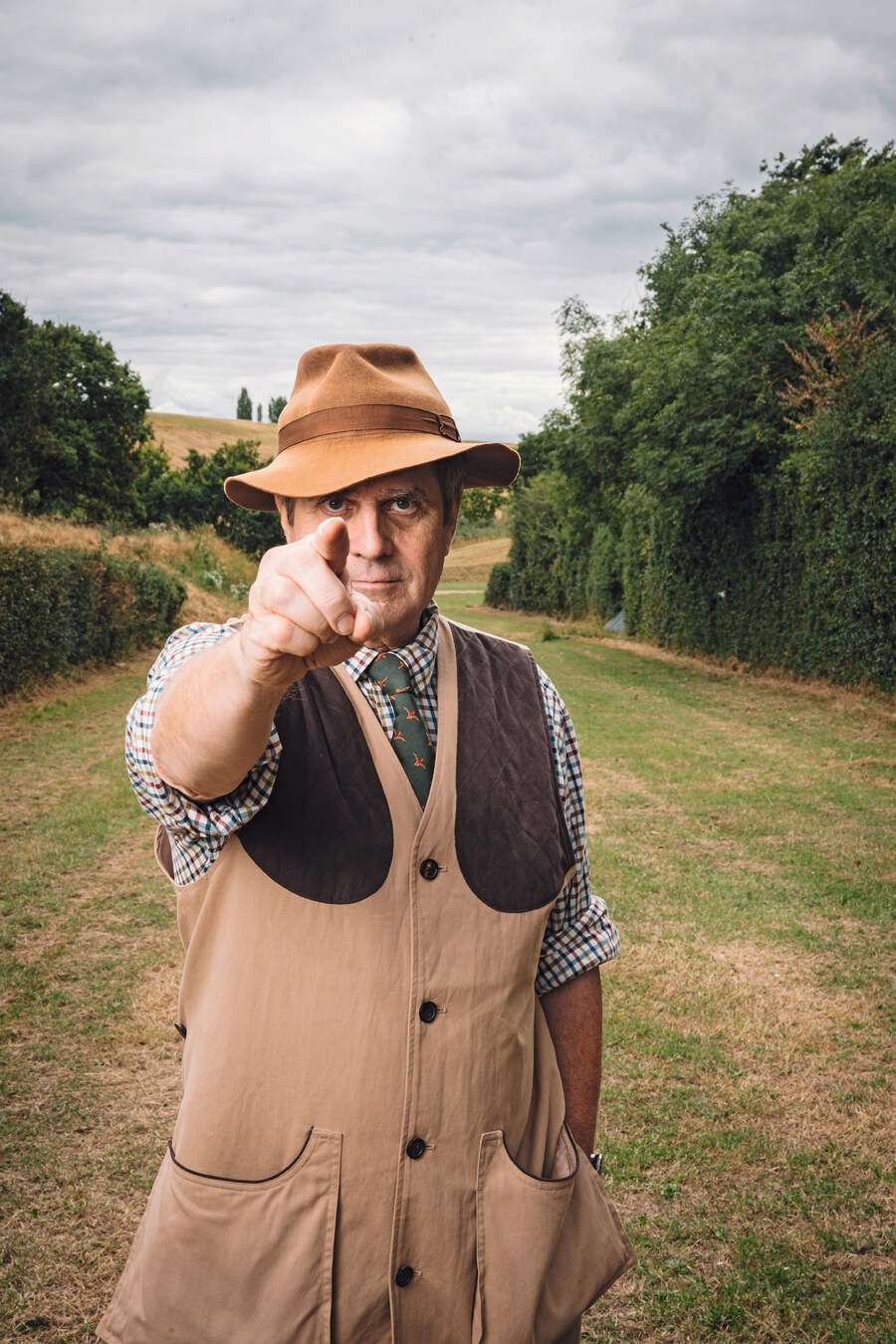
The pointing test is the first step in determining or checking eye dominance
The significance of disciplined, impediment-free vision cannot be overstated. Serious pistol shots used to have Epsilon stickers – essentially a capital E – that they might adhere, rotated on its side, to light switches or coffee cups to train themselves into looking for the right back sight picture (in pistol and iron-sight rifle shooting you focus on the foresight, not the target as we must when using a shotgun). We need to teach ourselves to keep focus locked on the target no matter what – perhaps we need little stickers of birds or clays in profile on household objects too? Sustained focus is a key skill that may be improved with awareness and practice. As well as clays and birds, try locking focus on to moving cars or planes (you will discover just how tricky it is). Yet focus must be locked on every bird, every time: far harder than you may think.
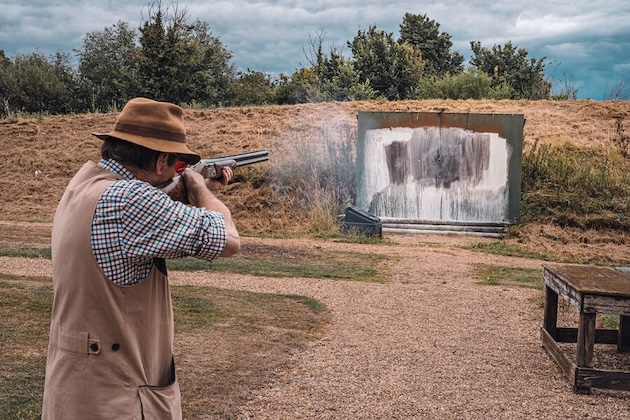
Shifts in eye dominance will soon become apparent at a pattern plate
Eye dominance needs professional assessment too. (Read more on eye dominance here.) You can experiment at a pattern plate. If you normally squint or close an eye, this should be the routine at the plates too. Try shooting both one- and two-eyed to better understand your vision. Don’t aim too much: focus on the centre mark, bring the gun up and fire without hesitation. Is the pattern on target or is it going to one side and/or high? You can also co-opt a friend to check your eye dominance. Get them to indicate one of their eyes with a finger held vertically just below it. Now, standing square to them, again without hesitation and with arm fully extended, point at the indicated eye/finger. Do it with both hands (the results can differ), and also by creating a circle with thumb and index finger touching (this circle test reveals subtle issues). Is one eye clearly dominant? Is it the eye on the same side as your shooting shoulder? Or is the opposite eye cutting in a bit and pulling your pointing finger towards its side (this can be a subtle or gross effect)? Still confused? Seek out professional help. Meantime, squinting an eye in some situations may help. I know several right-handed shots who need to do it on some birds from the right as well as clay ‘rabbits’. Binocular vision is always the preference but not everyone can keep both eyes open and shoot well in all situations, especially if eye dominance problems are creeping up on them. Experiment. Get tested.
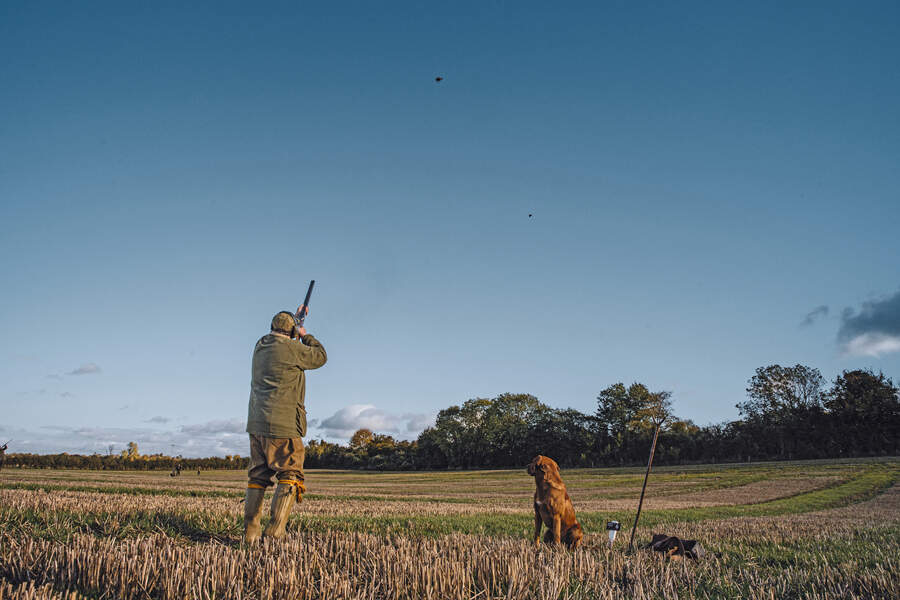
Gunfit, like eye dominance, can change over time and impact your shooting
Checking gunfit
This brings us on to gunfit, which like eye dominance can change. (Read more on gunfit.) Many shots may require a little more cast as they get older. This can compensate for less-than-absolute eye dominance in the eye looking down the rib. Faces can become fuller, effectively requiring more cast (or offset). Some, losing weight, may need a slight increase in comb height to prevent occasional cross-dominance induced by lower head position and lost sight of the bead at elevation. Women typically need higher and shorter stocks. Gunfit, like vision, should always be checked periodically as requirements change.
There are many other reasons for a loss of form: simple fatigue; checking the swing habitually; failure to read the line on harder birds; insufficient or poor-quality practice; and just not getting out enough. Loss of muscular strength should also be taken into consideration (the front arm is especially important) as can overthinking, rushing and lack of sound basic technique to fall back on. Standing badly, poor mounting and inadequate understanding of forward allowance are all potential culprits.
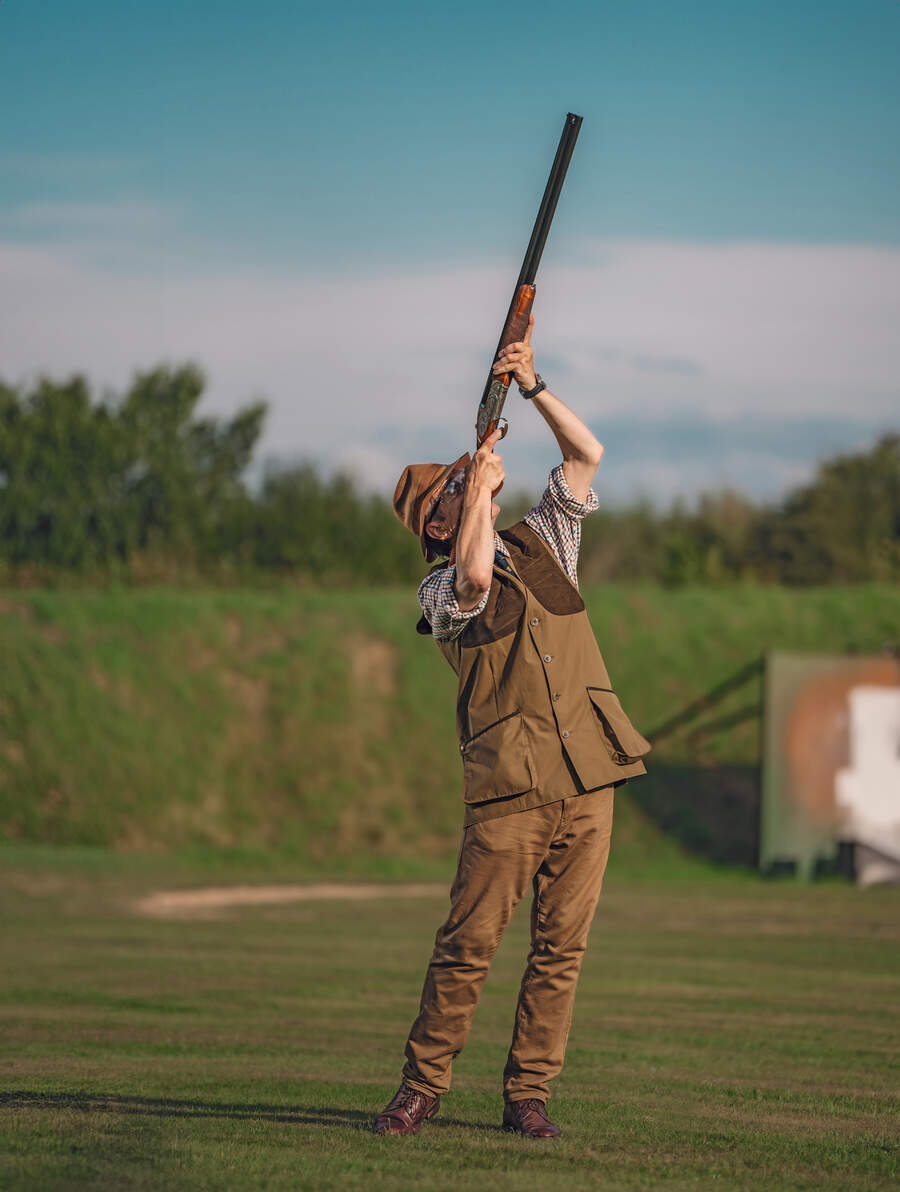
A clay ground is the ideal place to refine basic technique into ingrained habit
A clay range is an ideal environment to regain lost form and to refine fundamental elements of technique into ingrained good habit. I like to use a skeet layout as a training space. The easy incoming Station 2 bird from the low house is excellent for basic instruction on stance, gun mount, forward allowance and follow-through. You can move to Station 3 or 4 to make the crossing bird progressively harder (mirror image for a left-hander on Stations 6, 5 and 4).
A pre-shot routine helps on clays (but may be put aside later in the field). Note the bird’s line, stand where you want to kill it, take the gun muzzles back to where you first see the target clearly, and your vision to where you first see the target as a blur (not all the way back to the trap). Visualise a ‘smoked’ bird and call for your target. Stare it to death. Shoot without rushing or hesitation. Smoothly and with good timing – one, two, three – keeping your eyes locked on the target.
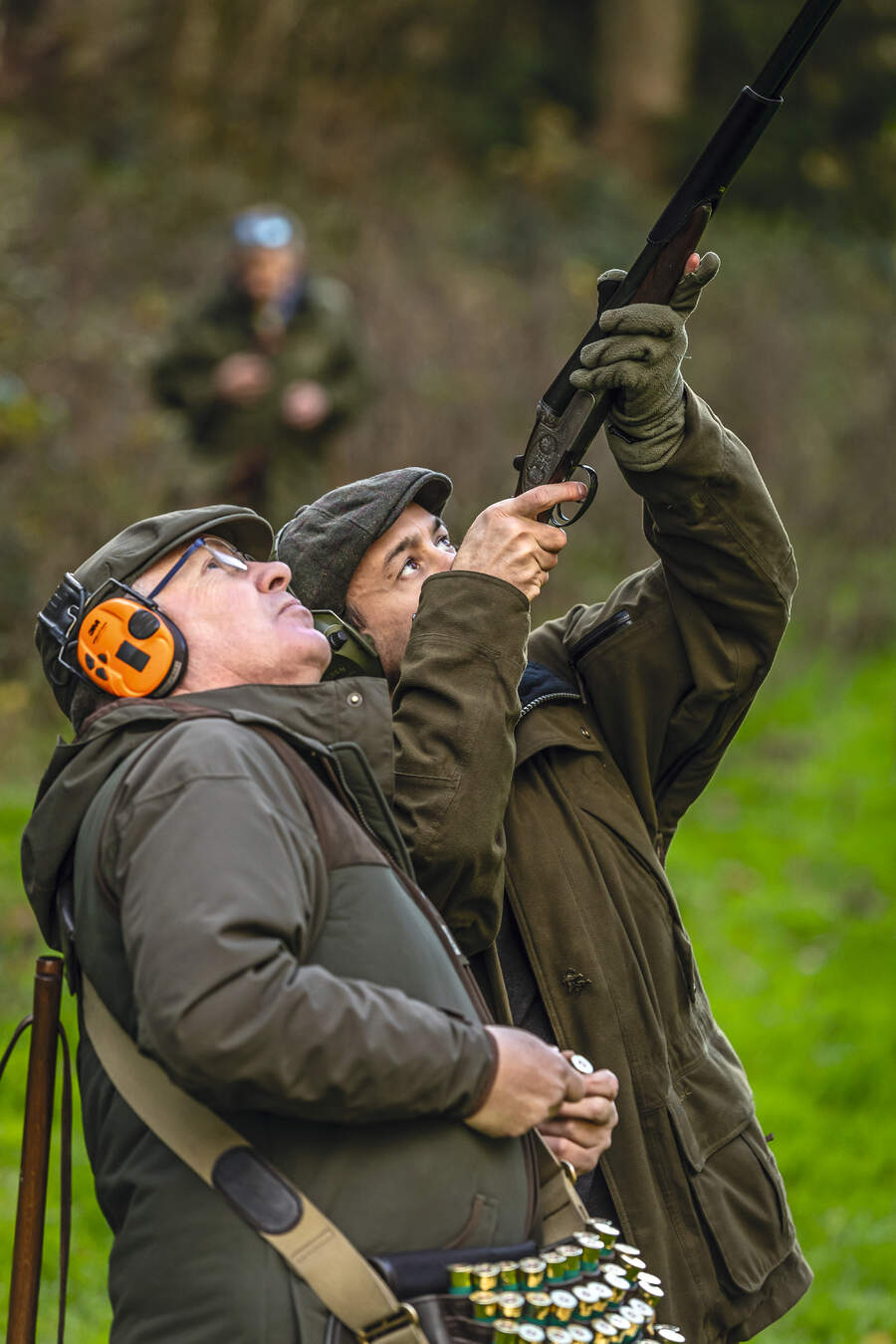
A back to basics approach can work well if struggling to connect
One common reason for shooting slumps is the bad habit of letting attention wander back to the gun. This can be in a mistaken effort to make sure of the shot. The more you try to make sure, the more likely you are to miss (usually behind). Trust your inner self and natural hand-eye coordination. It is cleverer than you may think if you maintain disciplined focus and keep moving.
Once you are shooting simple birds consistently again, work on the finer points. Are you following through well? Is your head staying down on the butt? Is your weight forward throughout the swing? Is your upper body rotating? Is it the engine of your swing? Or are you doing too much with the arms? Try experimenting with different systems of forward allowance on straightforward birds: swing through from behind, point and push ahead or maintain a lead by conscious measurement or instinctively (in both cases the barrels should remain in front of the bird throughout). Get comfortable with various systems. Awareness builds confidence and solid consistency.
Targets and training
The high-house crosser – Stations 4 and 5 – on a skeet range (from the left for a right-hander) also provides excellent practice because with this shot the head has a tendency to come away from the butt. You have to focus on ‘cheek weld’ and good upper-body rotation. This target brings out issues with the front hand and arm. You must lift as you rotate. Similarly on driven game, you must lift the barrels efficiently as you bend back on high birds (some may choose to transfer weight deliberately to the rear to facilitate this).
A mid-height tower presenting birds within an arc akin to a shooting peg is another helpful training resource. Some birds near the centre may be taken as incomers but many will require adjustment to line by deliberate canting/twisting of the barrels to match the flight line (a point much misunderstood). With a sideby- side, as birds go to one side or the other, you must try to keep your barrels parallel to the line of the bird. With an over-and-under, when not taking birds as incomers within a tight arc forward, you must achieve a perpendicular relationship between barrels and the bird’s line. To think of it another way, side-by-side or over-and-under, your shoulders should remain parallel with the line of the bird during the swing. For many, this does not come instinctively and is something to be learnt. The natural tendency is to take everything as an incomer, which will inevitably lead to errors of line.
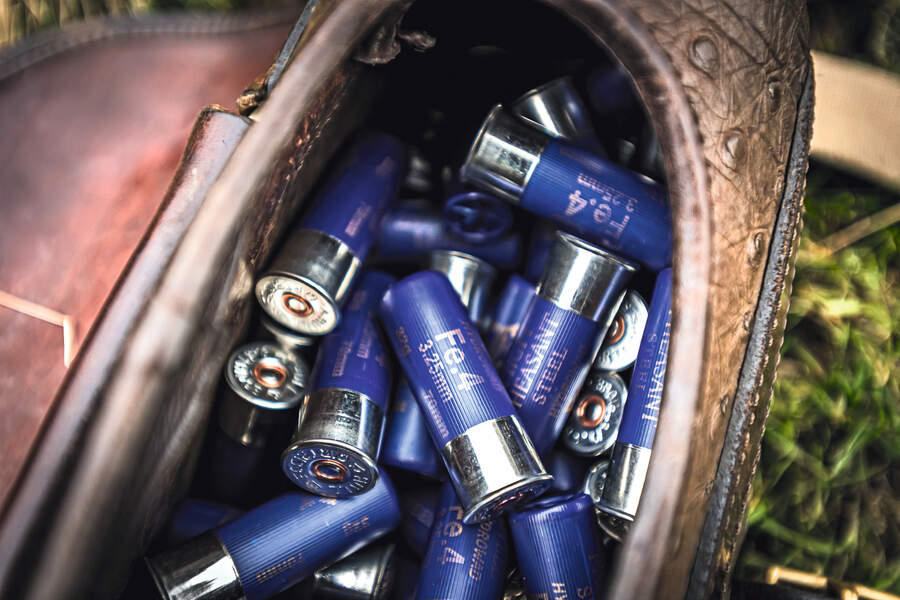
Changing cartridges and chokes may result in marginal improvements in performance but underlying technique is key
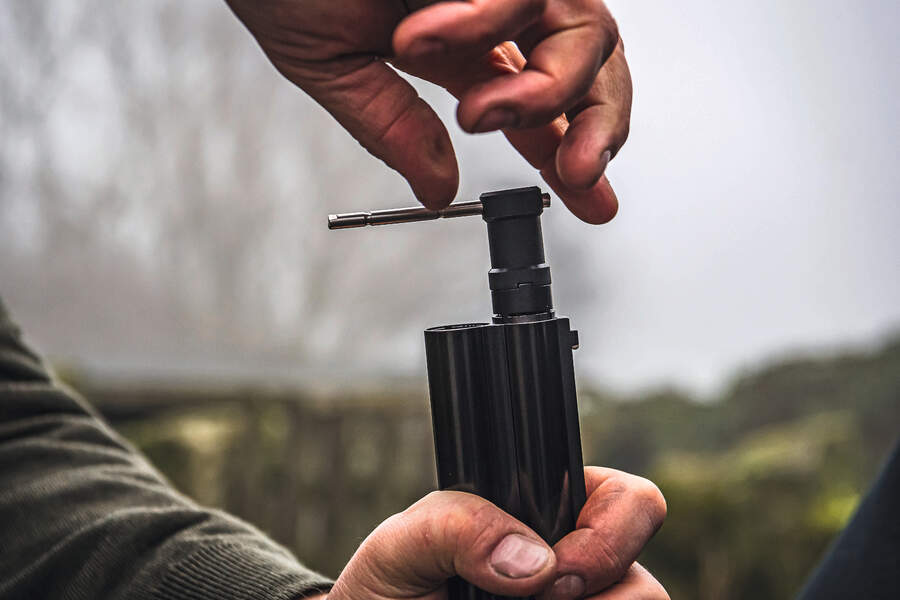
You will still need a good technique
A high tower is not only useful for learning more extreme leads; it can also diagnose any tendency that has developed to shoot up one side. Those with eye issues may be well advised to take some high birds as crossers. Driven or side on, my general tip is to start with the gun barrels roughly as far behind the bird as you intend to go in front. I call this ‘graduated swing through’, and for a really tall bird it might be four yards behind to go four in front. Some do not measure lead in this way, which is fine, but consider starting a little behind the bird as an aid to finding the line and to ensure you fire with an accelerating gun. I have also found shooting simulators valuable as aids to modern instruction, particularly when people are having problems with specific targets such as the high birds just mentioned (but you will need a simulator with a high screen to present these). The freeze-frame facility can be most enlightening. I recall a man who could not be taught to shoot a high-tower bird until he actually saw what he needed to do on the simulator. It was a revelation to him. The simulators show exactly what your barrels are doing in relation to the bird’s line. Though scarce, they are a wonderful tool for analysing swing dynamics and shot placement. In short, if you have experienced a drop in form, check vision and return to the basics. Ensure everything is right, as good as you can make it. When you are having difficulties, or just to improve, concentrate on perfecting process. Go back to fundamentals and the rest will follow naturally. The reason great shots do not have many off days is because their underlying technique is so sound, so well practised, so ingrained.
What doesn’t work?
While changing chokes and cartridges can result in marginal improvements, it’s not usually going to have dramatic effect. Switching guns can be beneficial but it can also lead to ‘new gun syndrome’ manifesting as a temporary fix. When I was young, people often used to change to a lighter gun in the erroneous belief that it would improve their shooting. Today the opposite inclination is apparent, with some moving to heavier guns. I will risk a straight opinion based on experience. For game shooting, my advice would be to stick with a 30in 20-bore over-and-under weighing about 7lb or a 30in 12-bore weighing around 7½lb. I do not advise very heavy guns or long-barrelled ones for normal mortals, especially if they are running into difficulties. The ideal London side-by-side circa 1900 – never bettered in my opinion in regard to handling dynamics – weighed about 7lb (and still a great weight for a side-by-side). A craze for light, short-barrelled guns appeared in the 20th century; now we have gone in the opposite direction with heavy, long-barrelled behemoths the norm in competition and increasingly seen on driven days too. Those who shoot such guns really well tend to be heavily muscled and expert. I don’t advise such guns generally for game shooting or recreational clays but working on upper-body strength (notably front-arm strength and core) can be useful if you don’t become too obsessive.
Good shooting psychology is about maintaining literal and mental focus. It does not need overcomplication. Anything that disrupts this is poor psychology; anything that promotes and sustains it is good psychology. Sometimes, though, when ‘the wheels fall off’ the shot is unable to take instruction or rationally correct themselves. What is required is a short break to reset. Straight barrels. Focus on focus.