



We have all felt that twinge of anxiety on the first drive of the day: a lone high bird coming straight for you, with the rest of the line watching, as you pray that pheasant doesn’t turn into a golden duck.
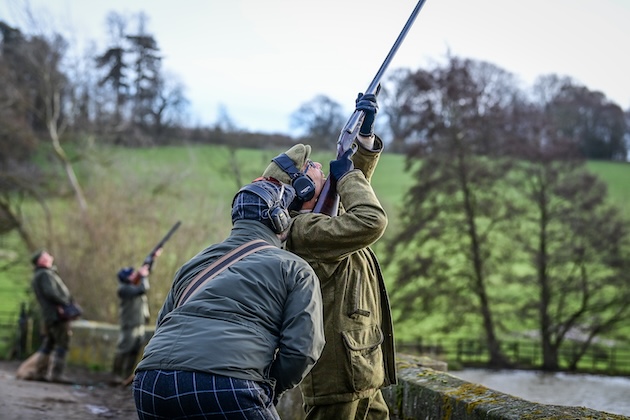
The challenge of a sporting bird
We all enjoy and remember our sporting birds. A towering pheasant will be memorable, but so too is that left and right partridge deftly picked from a manic covey of birds flashing past. The challenge grows as the season progresses and birds become wily and harder to hit.
Height and speed can be difficult to judge at the best of times, and harder still when under pressure on a busy drive. Understanding your own ability, your gun’s capability, and what your quarry does, is key to enjoying the day. Understanding will help with accuracy and decision making.
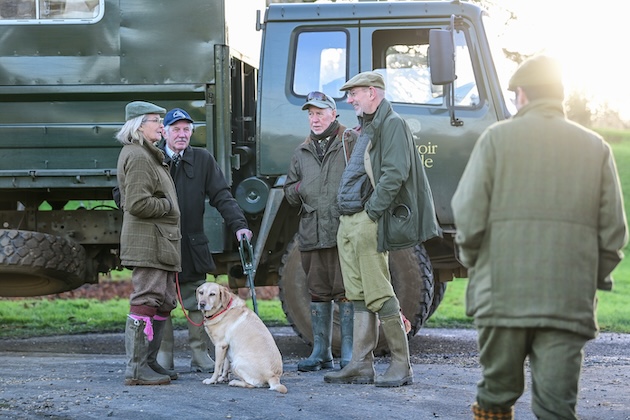
A confident choice
In the field we want to be safe and shoot our quarry cleanly, and confidence will help a gun achieve this. A confident swing is a smooth swing. The hurried speculative stab too often leads to a miss and the next perfectly presented bird passing overhead. As the season progresses and birds become stronger and faster this becomes even more important: having confidence in your judgement and your shotgun.
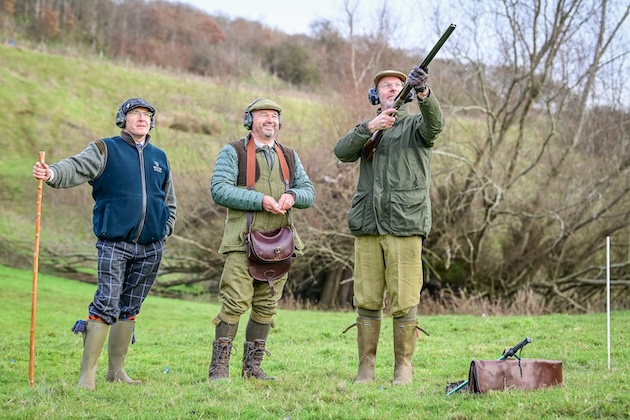
One of the most important judgements to make is assessing height.
The judgement call
Every bird presents it’s own challenge: height, speed, line of flight and the time a gun has to react. One of the most important judgements to make is assessing height. We generally know the speed a pheasant or partridge will be flying at, but the biggest variable is range. The height and direction of a bird determines the amount of lead a gun needs to give.
This is easier said than done, especially on a busy drive with partridge scattering left and right or a pheasant flashing past along the treetops. As with anything, it is a skill
that improves with practice and experience.
One of the most available reference points in the countryside is the humble tree. An established oak typically stands about 25-30 yards tall; mature beech trees can reach 40 yards and Douglas Fir 50 yards. Across most UK shoots a well-presented pheasant at 30 yards would be a top-quality sporting bird – push that to 40 yards and we would think it high. Of course, there are shoots that present their birds beyond this and earn the moniker ‘extreme’. The landscape may not always offer these convenient yardsticks. Shooting partridge on the treeless Wiltshire Downs is exhilarating but a testing affair with few frames of reference.
The answer is as ever to practice. Make a habit of estimating the height of things. Build better judgement through experience. Breaking clays at your local shooting ground will also help, as most shooting grounds have tower stands to help practice those high fast birds.
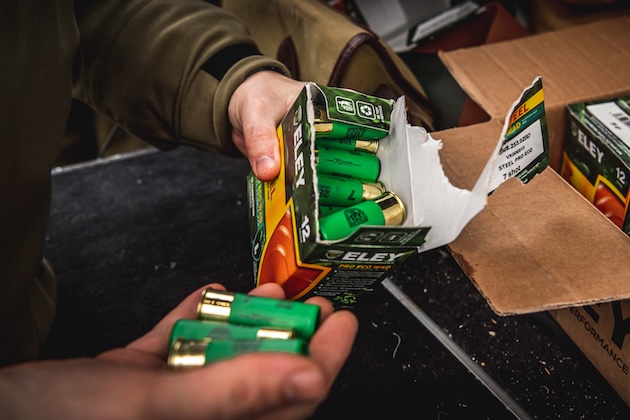
All guns must be responsible and ensure shot size and load is suitable for the quarry.
Trust in your gear
Knowing your gun is as important as technique and has a direct impact on performance in the field. Whether you favour a side by side or an over and under, an old English or a modern sporter, understanding your weapon instills confidence. The more you know your gun the less likely you are to hesitate. Regardless of whether your gun is a 28 or 12 bore, longer barrels may help with a smoother more controlled swing, although too long and heavy and your swing may falter. As with so much in shooting, the preference is personal. Choke selection is another consideration. Tighter chokes produce denser spreads of shot, so on higher bird shoots a tighter choke may help. If you can change chokes on your gun take advice from your gunsmith and experiment.
Pattern on a plate
Patterning a shotgun is one of the most valuable exercises a gun can undertake. Seeing exactly how the shot spreads removes guesswork and gives a practical understanding of how the pellets perform. Many shooting grounds have a test range to shoot pattern plates, and you should test your gun at different distances (and even with different cartridges): twenty yards, thirty and forty for example.
Cartridge choice
All guns must be responsible and ensure shot size and load is suitable for the quarry. Load is the weight of shot in a cartridge, and shot size refers to the diameter of the pellet (the higher number giving smaller pellets). It is also essential to choose a shell from a professional cartridge manufacturer to ensure a full and consistent powder burn: the quality of the propellant used is extremely important. Armed with your trusty 12- or 20-gauge shotgun, the classic all-round load for game is the 30g size No. 6. With an excellent balance of power and shot density, this cartridge is suitable for most situations in the field. Early season game might take a slightly lighter load, but as the season’s progresses one should increase the load and shot size for stronger performance. Larger shot delivers greater kinetic energy per pellet for those stronger or higher birds. One must also consider topography: shooting partridge on the flat farmland of Norfolk differs considerably to high pheasant in the valleys of Wales. On extreme shoots guns may even mean move up to a 32g No. 4. It is of course best to speak to the shoot organiser for their recommendation.
If one is privileged enough to be walking the heather after grouse, the 30g No.6 shot remains a proven performer. When harvesting this fantastic wild capital later in the season, birds are stronger and faster but seldom engaged beyond 40-yards so there is little need to go beyond 32g No. 5s. Ultimately, whilst there is an undeniable satisfaction taking a high bird to the accolade of your neighbouring pegs, the best reward is the memory of those well- judged birds, accurately and confidently taken. This is a memory that will make you smile long after the season has ended.