

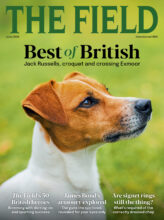


Janet Menzies offers reassurance that no gundog is textbook and suggests how to 'troubleshoot' the training problems your manual didn't allow for

Gundog training theory and the reality are two very separate concepts. In my experience there can be a gaping chasm lying between gundog training theory and its reality.
According to the books, your well-bred pup is meant to come home and quickly learn its obedience lessons. It then moves on to work in the field, where it continues to be steady and perform as laid down in the closing chapters of the training manual. Among all the books I have read concerning gundog training theory, only The Hundred and One Dalmations comes close to capturing the true scenes of chaos that occur during puppy training. (Read this piece on training gundog puppies.)
Famous trainers make all their theories sound not only plausible but utterly functional. Yet when you try to put them into practice with your first pup, somehow the instructions don’t seem to bear any relation to what you have in front of you. (Read gundogs – what you should know before you start.)
Experience
I will never my forget my disappointment when, with manual in one hand and feed bowl held high in the other, I first commanded a cocker pup to hup. The pup immediately looked up at the bowl, exactly as described in the user’s guide, but hup didn’t follow, and there was no troubleshooting section. The missing link is actually experience; once you have muddled through the training of your first few pups you can re-read the books and they make perfect sense.
With the hup command, for example, I just kept saying hup to my pup and waving my hand or a toy vaguely about in the air above its head, and it got the message after a while. Even just giving the command the instant your pup sits naturally will eventually set up an association, so that it learns the meaning of the command. (Read this advice on how to get your gundog to sit.)

Be patient, consistent and persistent
Complications
Contrary to the impression you may get from a training manual, you can be quite flexible about how you teach a command. Keep trying and you will find something that works for you and your pup. Don’t panic, be patient and if you are consistent and persistent things will get better.
In the early stages, though, each new lesson feels a lot more complicated than the books imply. Lead work and heeling is one area especially where I think trainers should be more open about what a nightmare process it can be. The usual instruction reads something like this: Have your pup trotting beside you on the lead. Keep the lead on but let it drop loosely over his back and continue on. The theory is that the youngster will not notice that he is effectively no longer on the lead, and hey presto! You have achieved heeling.
The reality is rather more like this: Have your pup dancing around on the lead at all angles like a fish on a line. Keep the lead on but let it drop loosely over his back and immediately rush to catch him as he takes off for the nearest flower-bed. I have yet to come across a pup that didn’t know instantly whether it was off the lead and swiftly work out the implications.
Bonding
In fairness to the experts, they don’t have space to write about the hours and hours of patient lead work you may have to put in to get your pup to be quiet and switched-off when it is on the lead. Some of the very best working dogs never really get it. But this is where that missing link of experience comes in. What makes lead and heel work teachable is that the dog is bonded to you in the first place. To an expert this goes without saying, to such an extent that very few of the books mention it. Your dog should always be slightly more interested in you than in anything else that is going on. It is really noticeable when watching the top handlers that their dogs only ever take their eyes off them in order to perform a task and even then they always have an ear open. (Read our advice on the best working dog beds.)
So, make sure you are the most important thing in your pup’s life from the start. When you begin the lead work and heeling lessons, retain that interest throughout. Keep changing direction and pace while walking him on the lead so that he must follow you.
Sitting and staying
Sitting and staying are also much easier to teach if the youngster is concentrating on you. Again, the books tend to imply that it is a simple matter to sit the dog up, walk away from it and then walk back to it. In practice a soft dog will follow you and a hot dog will head for that flower-bed again. With a follower, walk in a tiny circle round him and then gradually spiral your circle outwards so that he can sit there and know that you aren’t actually leaving him behind. With a flower-bed hunter, don’t tell him off (ultimately you will prefer him hunting to sitting), but go and get him and drag him back to where it all started. After a time he will get the message.

Flower bed hunter
Gundog training theory and practice
Lead Work and check-cords
The Book says: lead work teaches a dog to heel, and check-cords (extra long leads) help steadiness training.
Experience suggests: intelligent, keen gundogs always know the difference between being on and off the lead. When teaching heeling, hold a young pup’s favourite toy and keep his attention on you. Change direction frequently. If you are desperate, have a pocket full of dog treats to keep him with you. If he’s too clever for the check-cord, be ready to run to the dog whenever necessary.
Coming to command
The Book says: if the dog came when called as a pup everything else will follow easily.
Experience suggests: even the most biddable youngster goes through a phase of testing you out. You can usually get a dog which is reluctant to return to follow you if you run away from him. Make sure you know why a dog isn’t returning. (Read pick up points on retrieving.)
Sitting
The Book says: if you can get the dog looking up, he’ll sit down.
Experience suggests: pups don’t need to sit down in order to look up. You may have to push him into position while giving the command. Also give the command any time the dog happens to sit.
Punishment
The Book says: use a rolled-up newspaper and always punish where the crime occurred.
Experience suggests: if only life were that simple. Forget fancy props, the quickest way to get on top of misbehaviour is to run as fast as possible to the dog and scruff it.
This article was originally published in 2008 and has been updated.