





I am still surprised by the number of experienced game managers who fail to understand what these birds require by way of brood-rearing cover. With decades of research data from the Game & Wildlife Conservation Trust (G&WCT) to prove the case, most people now understand that chicks need to feed on insects. However, far fewer recognise that any old insects won’t do. Wee chicks need succulent and slow-moving creepy-crawlies down near the ground, not bees high among the flowers of a summer meadow.
It is also important to understand that mum has her own ideas too. Her instincts dictate that she will take her brood only where she feels safe. The favourite choice here is usually a cereal field where the family can run about under the canopy of swelling ears, out of sight of prying eyes. Back in the heyday of wild game, broods would have fared well in the slightly weedy “agricultural revolution” cornfields with their combination of cover and grubs.
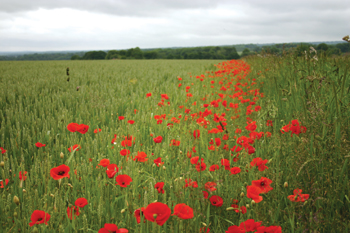
Today, in a well-managed corn crop, the weeds are under control and their associated insects have no home. However, this does not prevent the hen from taking her chicks there in hope, hence the invention of the G&WCT’s “Conservation Headland” more than 20 years ago. By cropping normally but leaving off both herbicides and insecticides (and, these days, probably fertiliser too), a strip of agricultural revolution crop is restored and chick survival goes back up to where it should be. What is more, by having it right alongside the nesting hedge, the conservation headland means that the broods step straight out of bed and into breakfast.
For farmers who cannot face the idea of an undermanaged headland, the alternative is to grow dedicated brood cover. This can be done either by taking narrow strips of land out of production or by using the Stewardship Scheme wild-bird seed-mix option. Either way, the aim would be to grow strips dominated by cereals alongside good nesting. Whichever you use, the good news is that once the chicks get there they rarely stray, leaving the farmer to grow a top-quality crop in the rest of the field.