




Dethrone the turkey and return to tradition this Christmas with a collection of recipes that restore British game to its rightful place on the festive table writes Tom Godber-Ford Moore
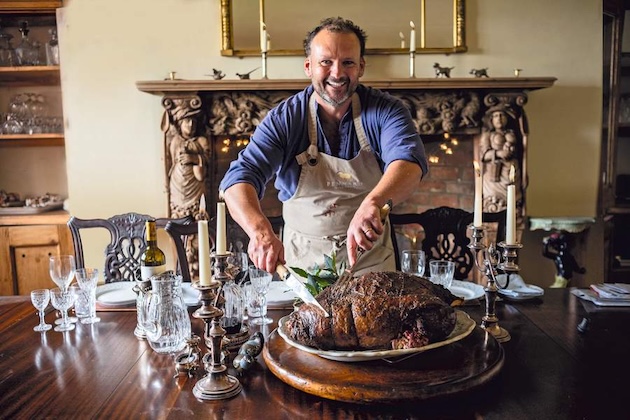
If the history books are to be believed, we have Henry VIII to ‘thank’ for first adding turkey to the table, but as far as I’m concerned he would have done better to leave it in the Americas where it belonged. He may well have been the first monarch to include it on the Christmas menu but the lion’s share of the blame must lie with turkey itself, for the bird’s capacity for fast and inexpensive growth is the chief reason behind its usurpation of the goose, hog and haunch.
No sooner has December found its feet than descends the unending supply of festive well-wishers, card-delivering drop-ins and gift-laden family members, each one more half-starved and thirsty than the last. Well bring ’em in, I say, and use the opportunity to get through that mountain of game you’ve been diligently amassing over the past several months.
It may even inspire them to eschew the American invader and put some British game on their own Christmas menus. (Read our guide to port for Christmas.)
When I am planning the festive season menu, there are always plenty of occasions, equally as important as the big day itself, when game can be included: something celebratory but not too flash for the night of arrival; something I can just pop in the oven, go off for a good blow over the moor and return to, hot and yielding; and finally the pull-it-out-of-the-bag crowd-pleaser for unexpected or last-minute guests. Follow the recipes below this Christmas and seamlessly add the best of British game to your festive table. (Read The Field’s guide to the best Christmas wines.)
The make-ahead Christmas Eve supper
Half of your guests arrive early, half of them late and you’ve been so busy in the kitchen that you’ve still got presents to wrap before the morning. This riff on HM The King’s favourite recipe is not only easy to make ahead, freeze, defrost, cook and serve but will hold well in the bottom oven for any traffic-cursing stragglers. Like the monarch himself, it is gloriously life-affirming, as at home with fine white Burgundy as it is with a simple glass of sherry. I adore the pungent decadence that truffles bestow but don’t worry if they aren’t your thing – it is still completely delicious without them.
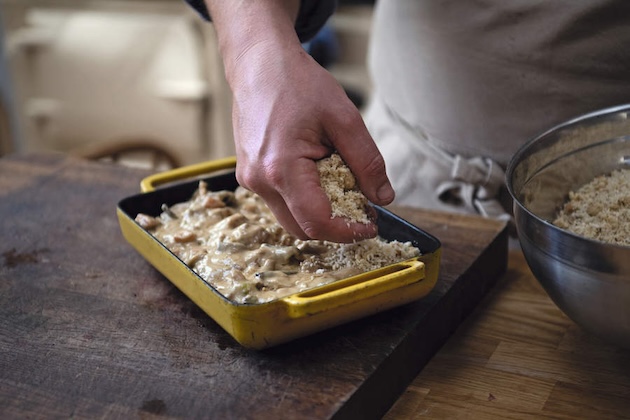
Truffled pheasant, hazelnut and thyme crumble. Serves 4
Ingredients
- 50g dried porcini
- 400ml pheasant stock
- 1 tbsp olive oil
- 100g smoked pancetta, diced
- The meat from 2 pheasants, chopped into 2cm pieces (use the carcasses for stock)
- 80g butter
- Salt and pepper
- 50ml dry sherry
- 65g plain flour
- 150ml double cream
- 2 tbsp parsley, finely chopped
- 1 tbsp good white truffle oil, such as Tartufalba
Crumble topping
- 200g unsalted butter
- 350g self-raising flour
- 100g toasted hazelnuts, roughly chopped
- 1 tbsp fresh thyme, finely chopped
- 1 tsp salt
- 1/2 tsp pepper
Method
- Place the porcini in the pheasant stock and leave for at least 30 minutes.
- In a pan on a medium heat, gently fry the smoked pancetta in the oil for 3 minutes then add the pheasant meat and butter along with a pinch of salt. Fry until the pheasant is cooked – this should take around 8-10 minutes.
- Turn up the heat and add the sherry, flambéing if feeling theatrical, then reduce until the liquid has almost gone.
- Add the flour and stir well, turn down to a medium heat and allow to fry for another minute or so.
- Pour in a splash of the stock and stir well.
- Gradually add the remaining stock, allowing the porcini to tumble in as you do so, stirring all the while until you have a thick sauce, then add the cream.
- Bring to the boil then remove from the heat.
- Stir through the parsley with the truffle oil and pour the mixture into a suitably sized casserole dish or pan that will also accommodate the crumble topping. As this is a rich dish, I feel the best balance is achieved with a shallower dish rather than a deep one.
- To make the topping, rub the butter into the flour until you have a roughly textured rubble. Add the hazelnuts, thyme and seasoning then scatter it over the pheasant mixture. Cover and place in the freezer. Defrost in the fridge for 24 hours before cooking. Cook at 200°C fan/Gas Mark 7 for approximately 30-40 minutes until piping hot, golden brown and bubbling
The slow cooker
This Moroccan number is a great favourite of mine. It is quick to prepare, and once it’s in the oven you can forget about it for a few hours while you head out to blow away the cobwebs and build up the appetite your guests may have mislaid.
I like to cook the birds on the bone for maximum flavour but for ease of eating I remove the backbone with a good pair of kitchen scissors. Simply cut either side, then snip the two half-birds in two again halfway down the breast, leaving you with four quarters apiece. A heavy-bottomed pan with a close-fitting lid will do for this but the conical shape of the tagine dish helps keep the meat moist.
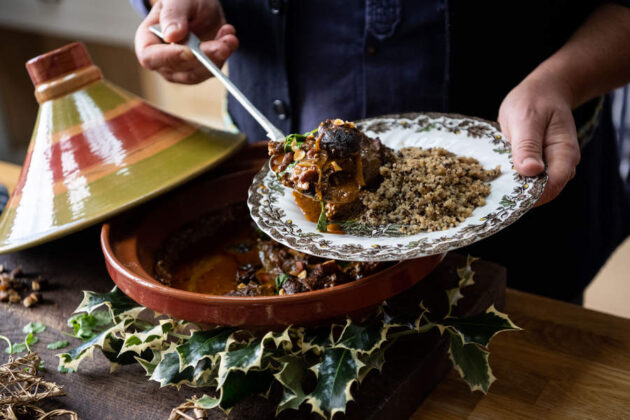
Partridge and prune tagine. Serves 4
Ingredients
- 2 white onions, sliced
- 2 cloves garlic, sliced
- 6 tbsp olive oil
- 4 oven-ready partridges, backbones removed
- 2 tsp cumin seeds
- 2 tbsp fennel seeds
- 2 tsp ground cinnamon
- 3 tsp ground ginger
- 2 tsp ground coriander
- 3 tsp ras el hanout
- A pinch of saffron strands
- 100g butter
- 150g dried prunes
- 500ml chicken/game stock
- 4 tbsp sugar
- 2 tsp salt
- Juice of 1 lemon
- 2 tsp pepper
- 2 tbsp tomato purée
- 100g roasted almonds, roughly chopped
- A handful of fresh coriander, roughly chopped
Method
- In a pan on a low heat gently fry the onions and garlic in 3 tablespoons of oil until well softened.
- Remove from the pan, turn up the heat and brown the partridge all over in the remaining oil.
- Reduce the heat and return the onions and garlic to the pan along with the spices, butter and prunes.
- Continue to cook on a low heat for a couple of minutes, turning the ingredients around in the spices so they are well coated.
- Add the chicken or game stock, sugar, salt, lemon juice, pepper and tomato purée, and bring to a simmer.
- Place the lid on the dish and put into an oven heated to 150°C fan/Gas Mark 31/2.
- Leave to cook gently in the oven for around 2-21/2 hours while you head out into the fresh air, returning from your constitutional with renewed appetites all round.
- Serve piping hot and steaming with some simply cooked couscous, a scattering of roughly chopped almonds and a sprinkling of fresh coriander.
The Christmas lunch showstopper
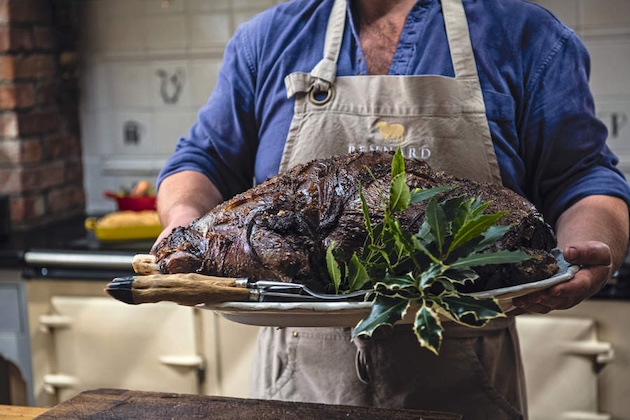
Part of the reason I think a turkey is popular is that it’s so big. It carries with it to the table an air of gravitas and drama that a smaller bird simply cannot command. That being the case, I have turned to venison, harking back as it does to the opulence of a bygone era. Roasting a great hulking haunch of the stuff, packed with rich livers, chestnuts and mushrooms to highlight the earthy notes of the meat, is something to behold. I defy anyone not to be impressed as you perform your grand parade to the table with this one. If you are few in number, crack on anyway, I say, as cold venison is a real delight and there are any number of dishes you can make with the leftovers, from curries and pastas to pies and stews.
Venison haunch stuffed with liver, chestnuts and mushrooms. Serves 12 (with leftovers)
Ingredients
- 1 whole venison haunch on the bone (the haunch I used was around 8kg but feel free to scale down as appropriate)
- Salt and pepper
- An assortment of roughly chopped vegetables such as carrot, celeriac, celery and onion, to act as a trivet
- 500g butter
Stuffing
- 2 white onions, finely chopped
- 3 cloves garlic, crushed
- 1kg venison sausage meat
- 200g fresh breadcrumbs
- 500g duck livers
- 200g cooked chestnuts, roughly chopped
- 200g wild or chestnut mushrooms, roughly chopped
- 2 free-range eggs
- A few sprigs of fresh rosemary, finely chopped
- 1 tbsp dried oregano
- 1/2 tbsp dried thyme
- 1 1/2 tsp salt
- 1 tsp pepper
- 2 tbsp brandy
- You will need a few yards of baking string
Method
- First you will need to tunnel-bone the thigh bone from the haunch. If you are doing this yourself, you will need a sharp boning knife. Working from the ball joint that would fit into the hip bone socket, push the tip of the knife close along the thigh bone until you reach the knee joint at the top of the shin.
- Work the knife all the way around the bone until you have achieved a meaty tunnel, with the bone emerging but stuck like a grounded barge. Working deep in the heart of this tunnel, with no sight of what you are doing, you will need to employ gentle twists and slices of the tip of the knife while also twisting the thigh bone until it eventually breaks free. Throw the bone to the dog, pour yourself a drink and admire your work. You now have a deep pocket to fill with delicious stuffing.
- To make the stuffing, gently sauté the onions on a low heat until they are translucent, add the garlic and allow to cook gently for a further minute. Remove from the heat and, once cool, place in a large bowl, adding all the other stuffing ingredients and mixing well.
- To prepare the haunch, use a knife to widen the tunnel laterally into a pocket, being careful not to tear all the way through the meat.
- Push as much of the stuffing as you can into the pocket. If you have any left over, you can simply roast this separately.
- Tie up the haunch, first around the thigh muscle then lengthways to seal the thickest end, where the stuffing may come out of the open end of the pocket.
- Season the haunch liberally with salt and pepper, and lay on the bed of chopped vegetables in a large roasting tray.
- Slice half the butter and place on top of the joint. This may seem excessive but it will also give you something to baste the joint with.
- Place in an oven preheated to 220°C fan/ Gas Mark 9 for 30 minutes to get it going, then reduce the temperature to 150°C fan/Gas Mark 31/2, cooking for 8 minutes per pound.
- Baste the joint with the cooking juices every 20 minutes or so.
- When the cooking time is up, remove the joint from the oven, place slices of the remaining butter on top, cover loosely with foil and leave to rest in a warm place for 30 minutes minimum, ideally an hour, before placing on a carving dish and parading to the table in suitably grand fashion. Serve with all the usual Christmas lunch trimmings and enjoy.
You might like to read: The Field’s guide to Christmas